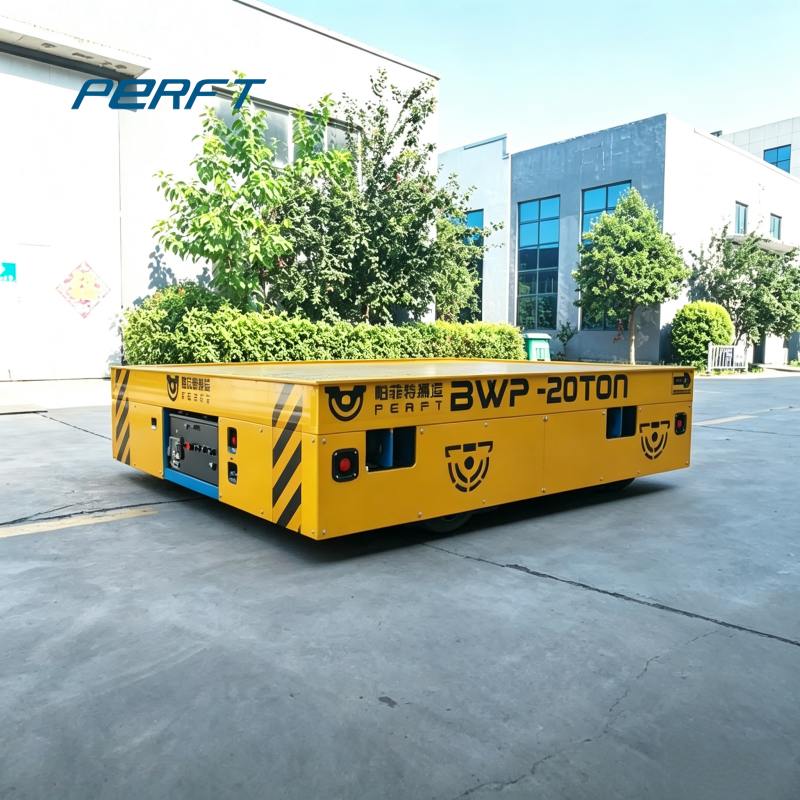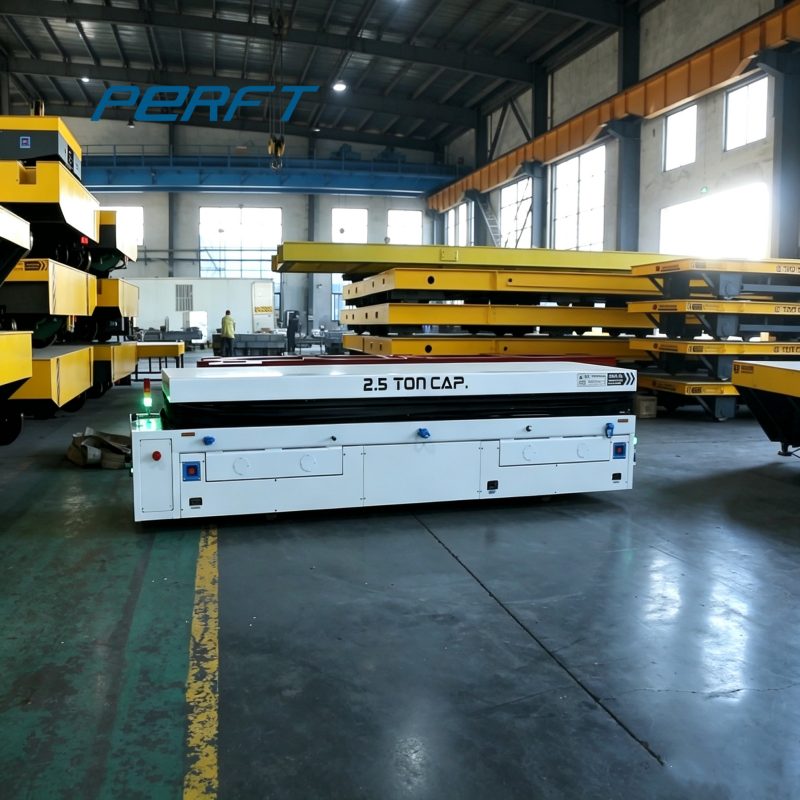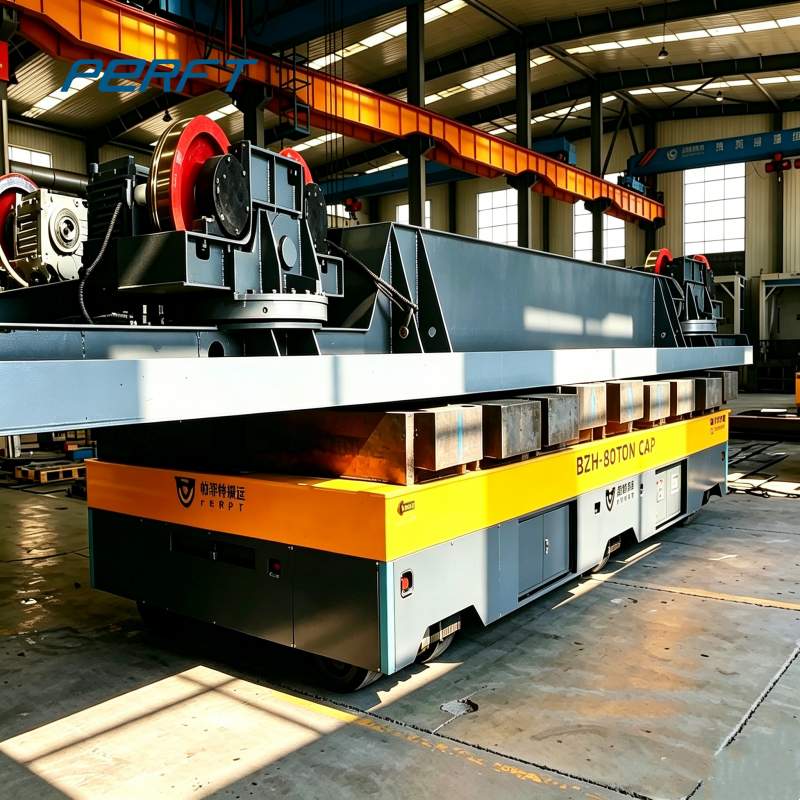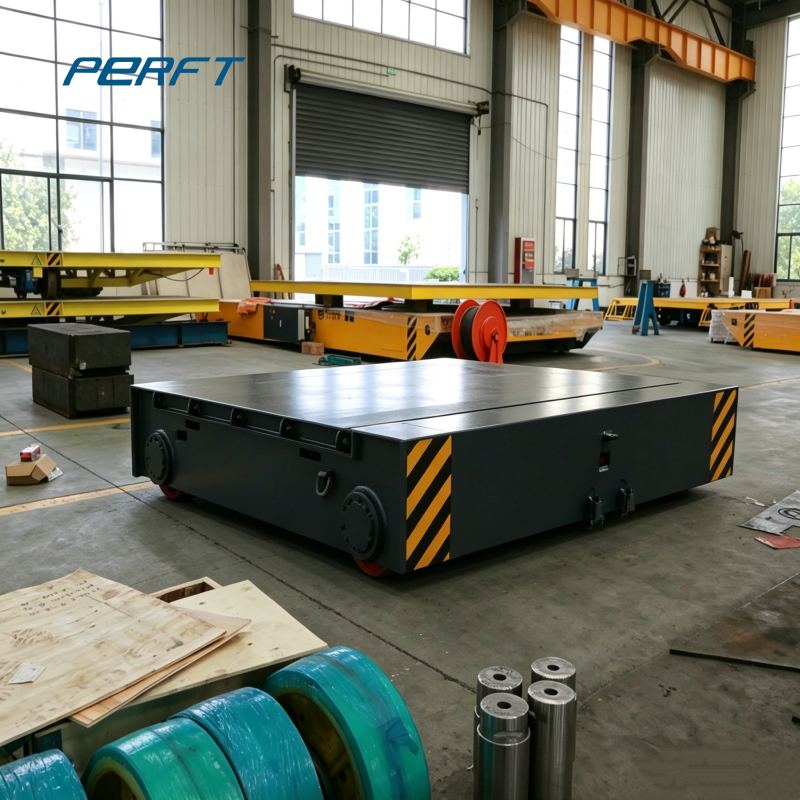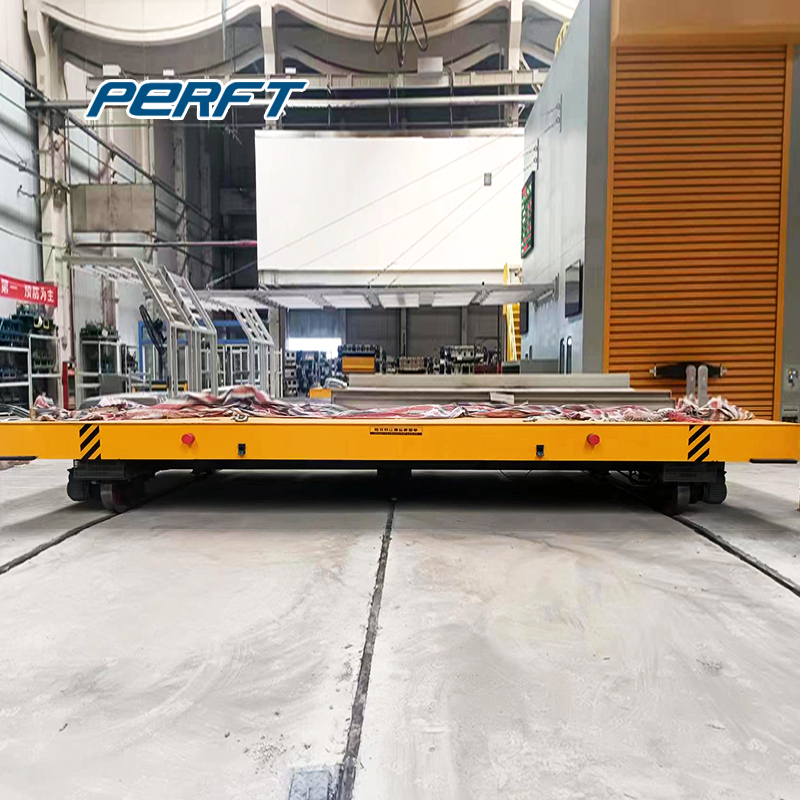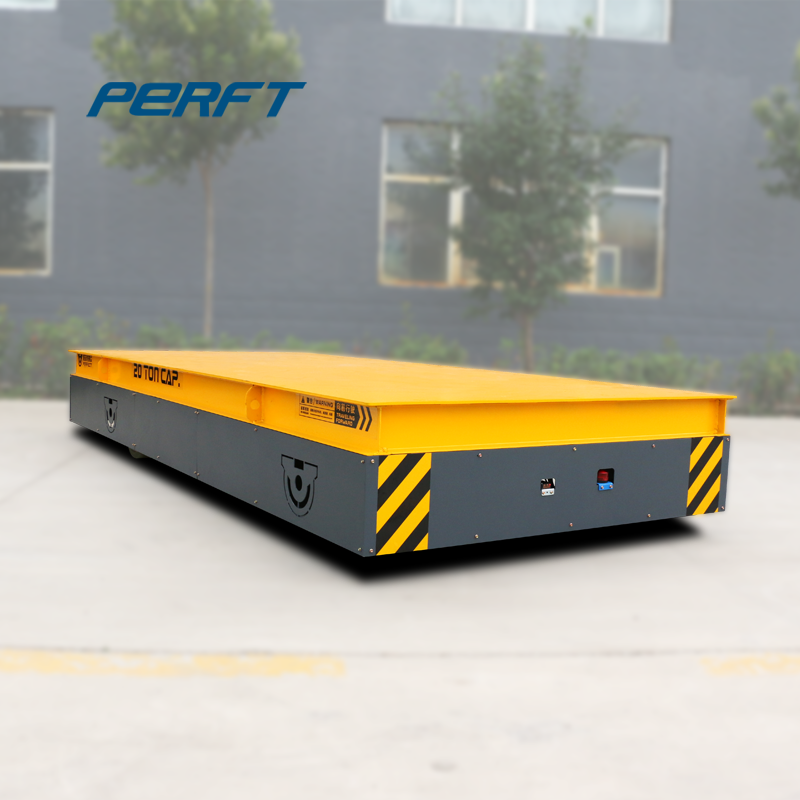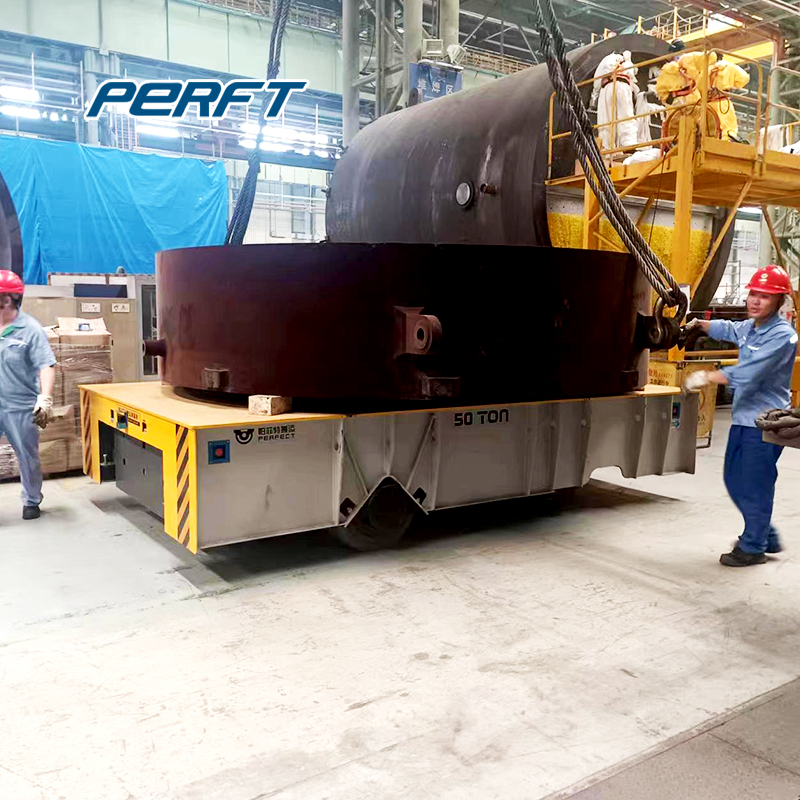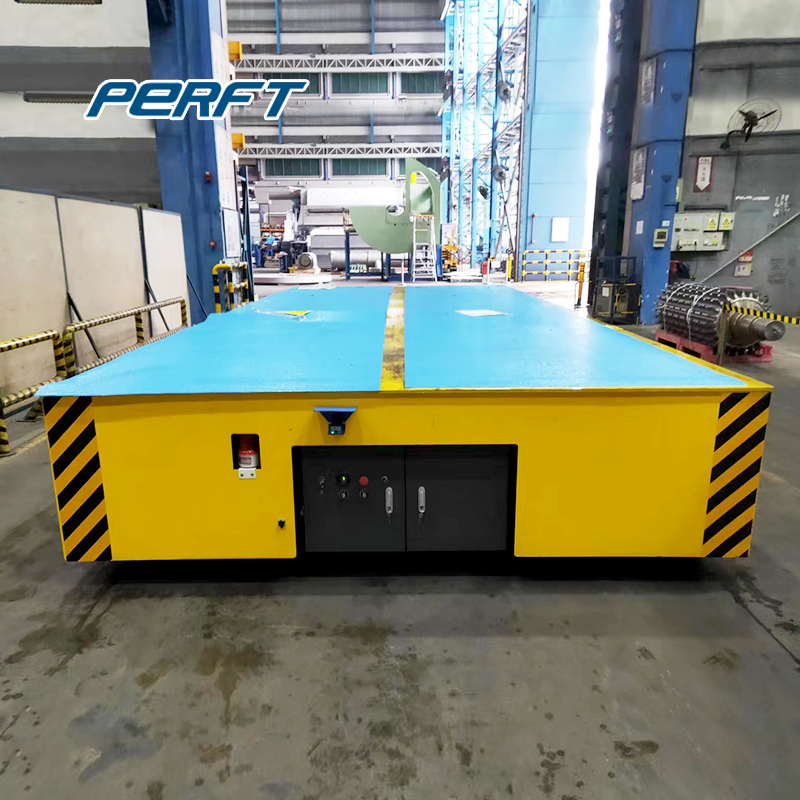
What Functions Does Factory Rail Flatbed Towing Cart Have
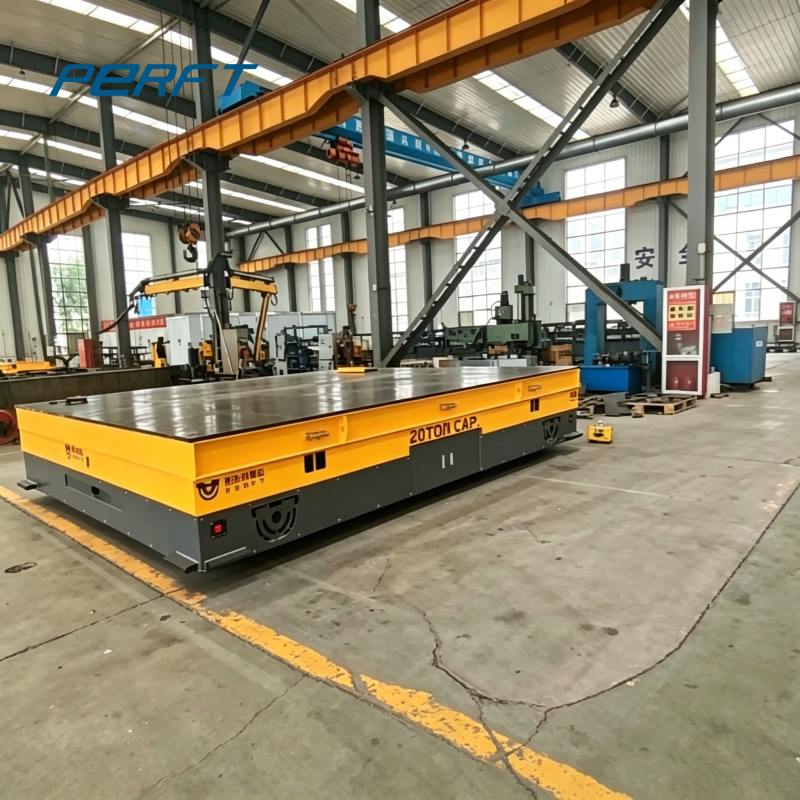
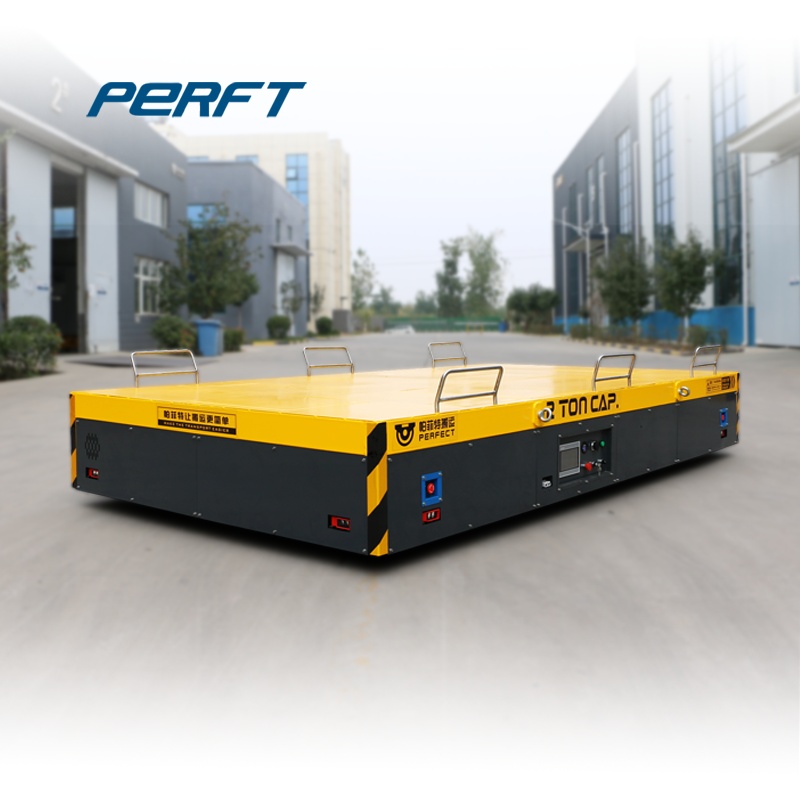
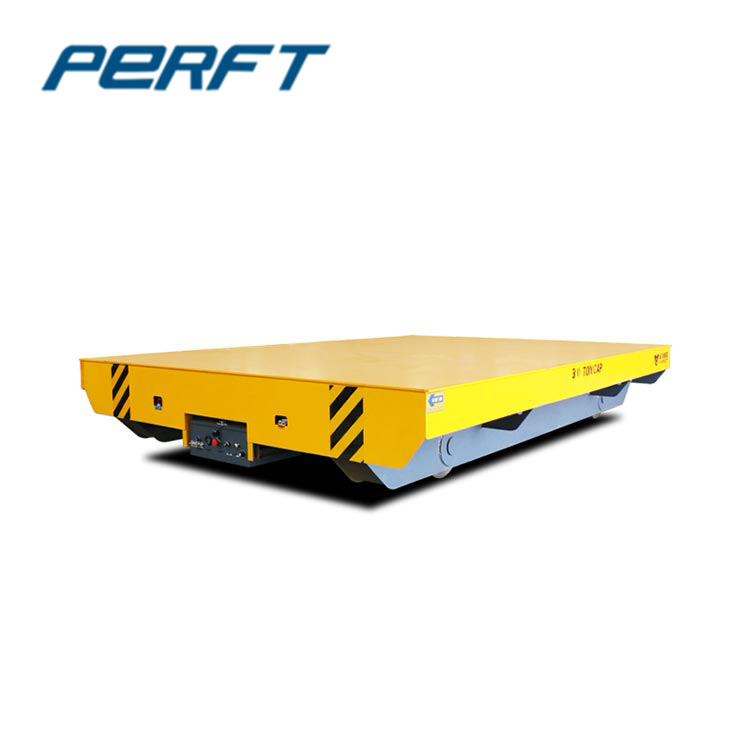
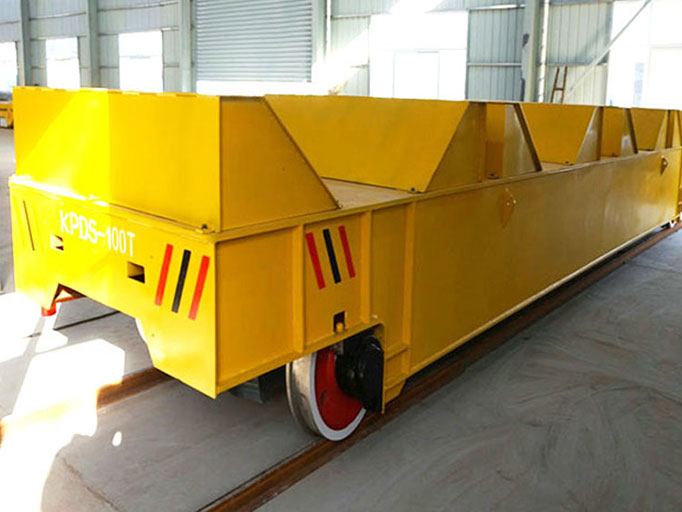
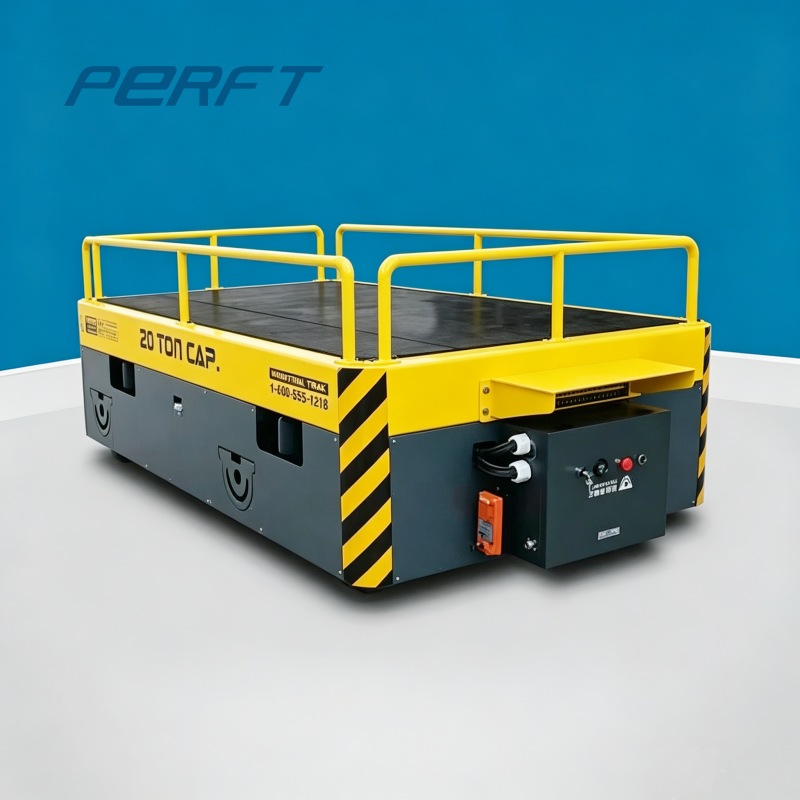
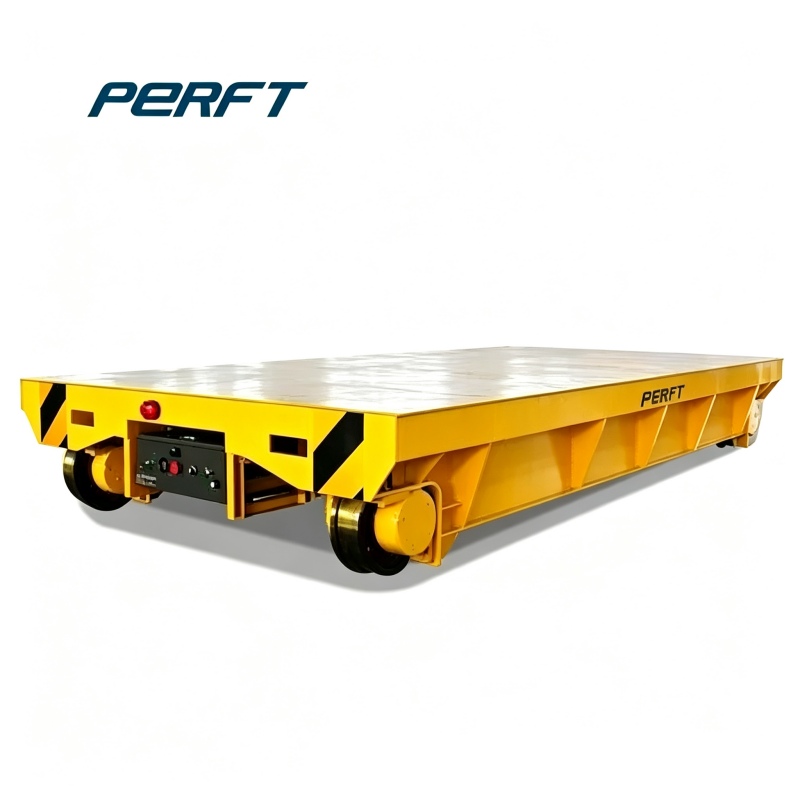
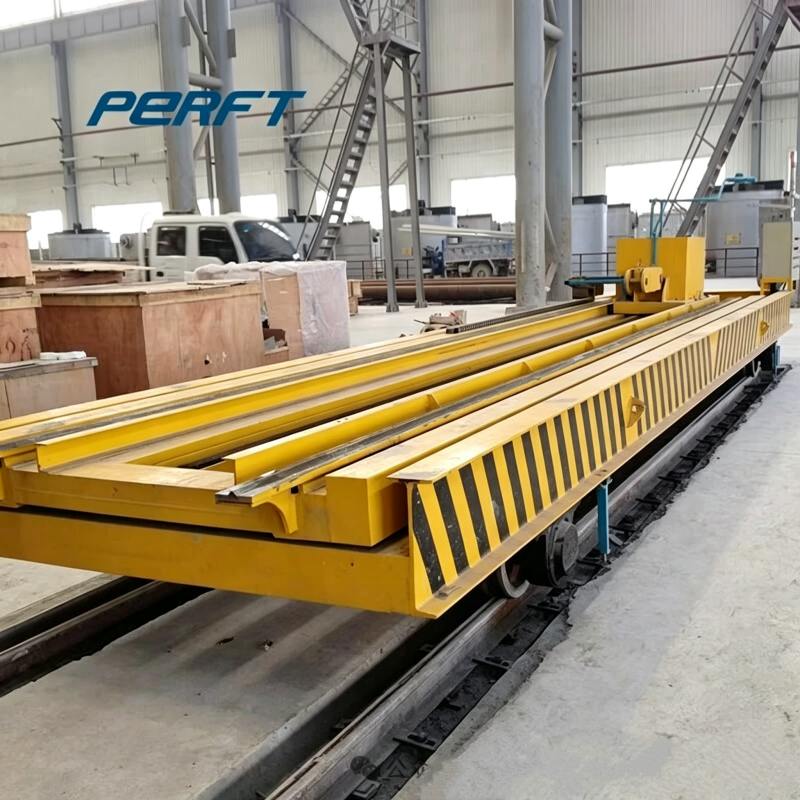
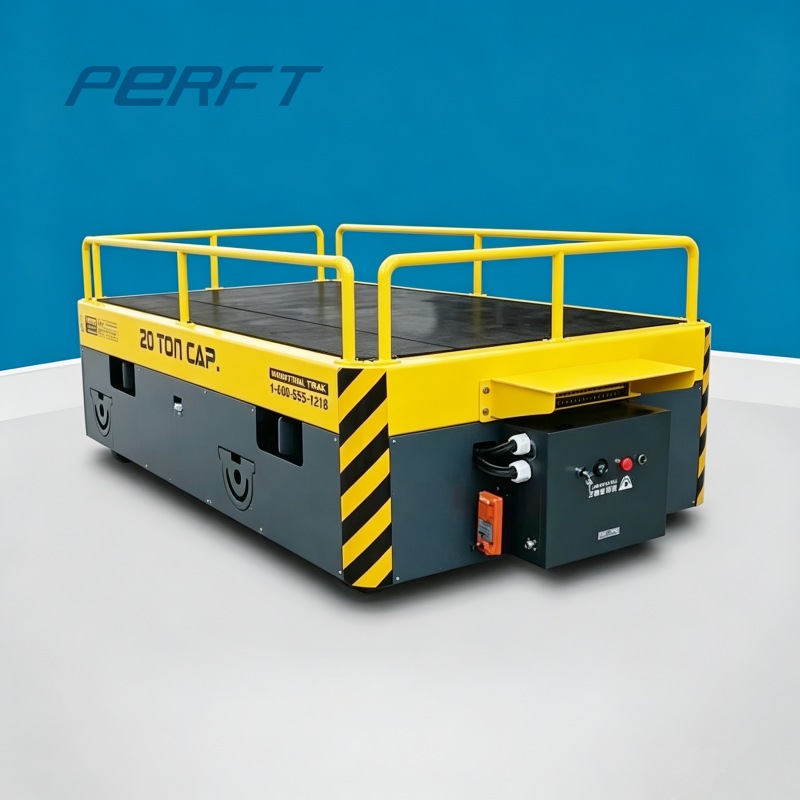
Factory rail flatbed towing carts provide a reliable solution for moving heavy materials and oversized workpieces between workshops. With towing and loading capabilities, customized load capacities, multiple power options, and robust frames, these carts support efficient long-distance and batch transport. Advanced control systems, overload protection, automatic positioning, and comprehensive safety features improve operational reliability. Optional hydraulic lifting decks, rubber wheels, and tipping platforms further expand their applications. They are widely used in steel, machinery, foundry, energy, and warehouse logistics operations.
For modern manufacturing plants, moving heavy raw materials and oversized workpieces between workshops has long been a big headache. Ordinary forklifts have limited load capacity and waste a lot of time on repeated short-distance trips. Overhead cranes, on the other hand, can only work within fixed zones. Factory rail flatbed towing carts come with custom-built frames, reliable power supply, and comprehensive safety features. They help factories streamline internal logistics and cut operating costs, and have become a must-have heavy-duty transport solution. Let’s walk through their main practical functions in detail.
Towing and Loading Combined for Batch Transfer
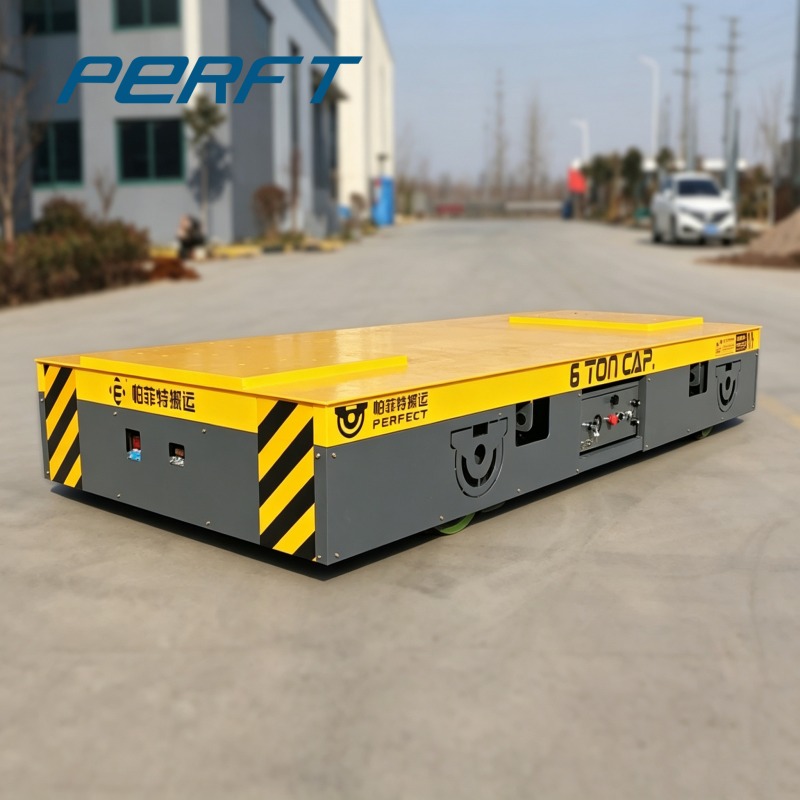
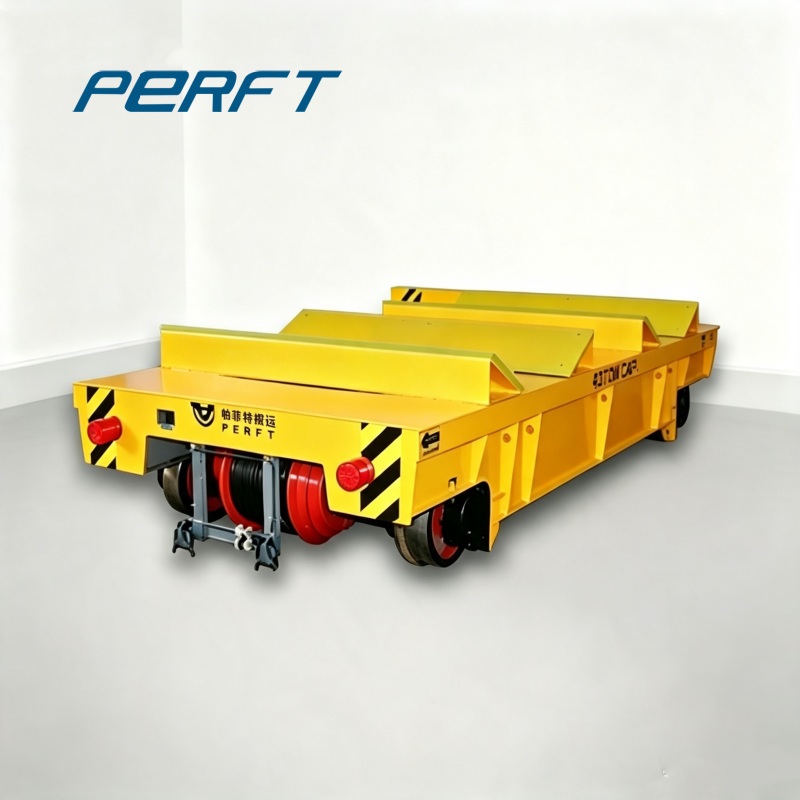
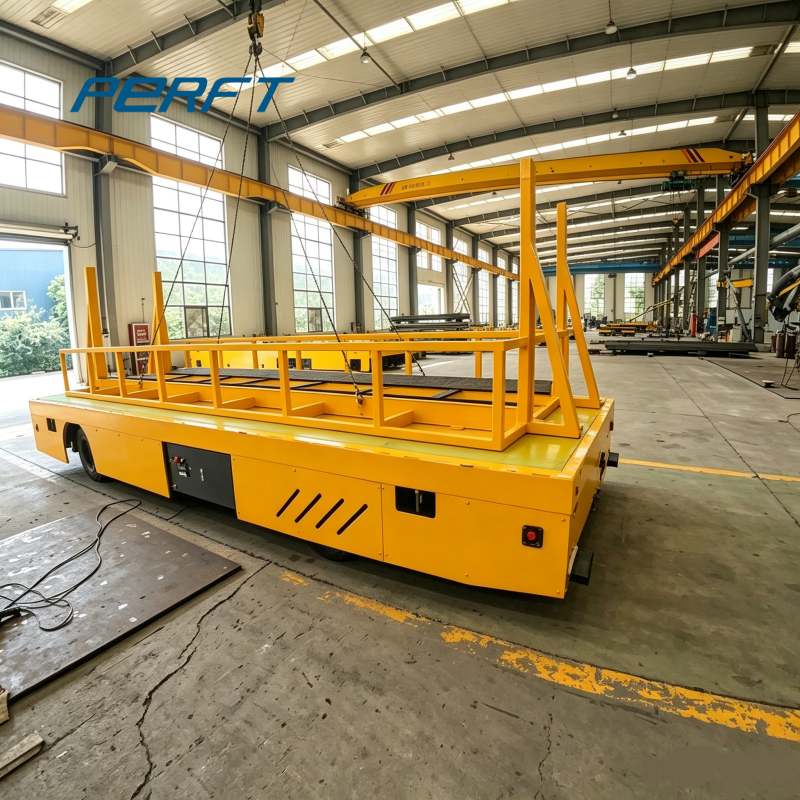
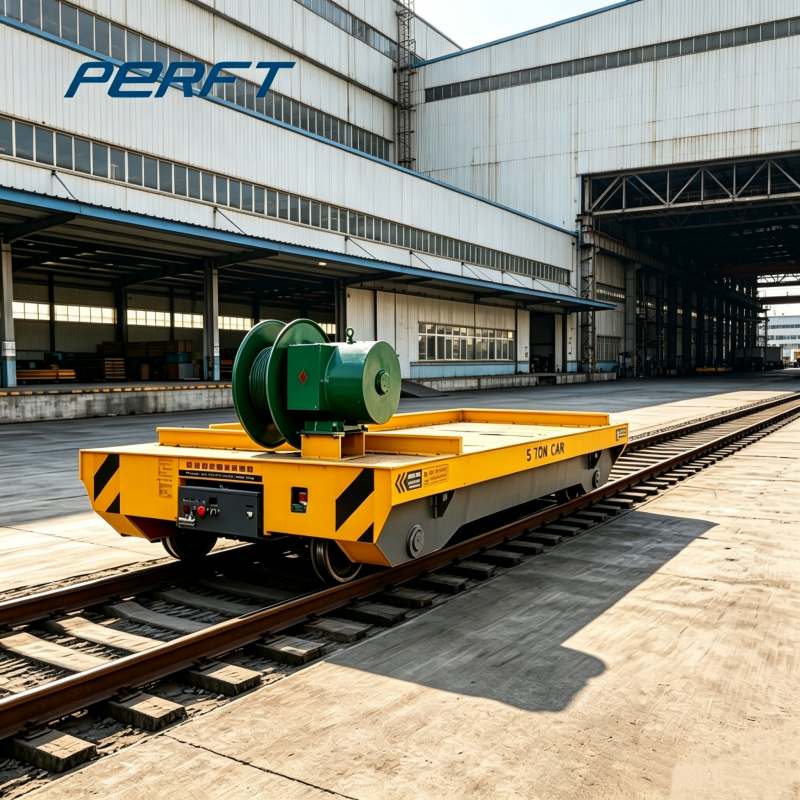
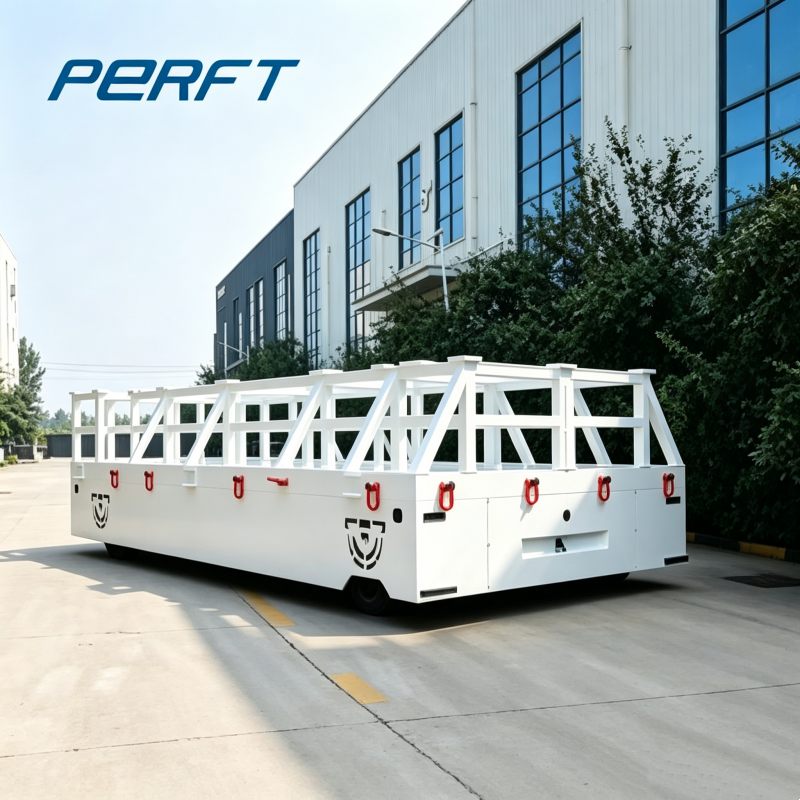
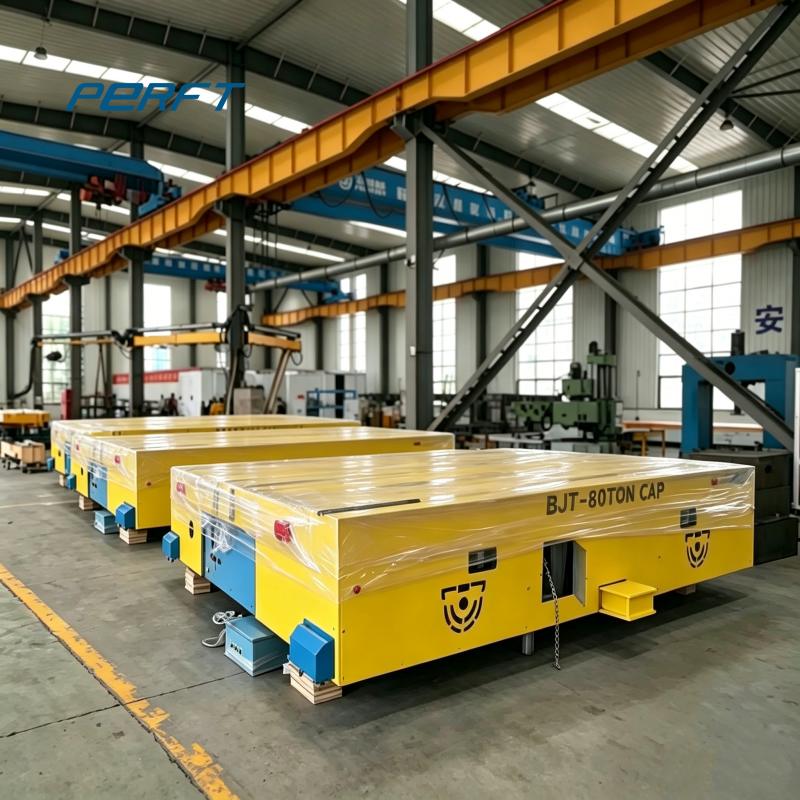
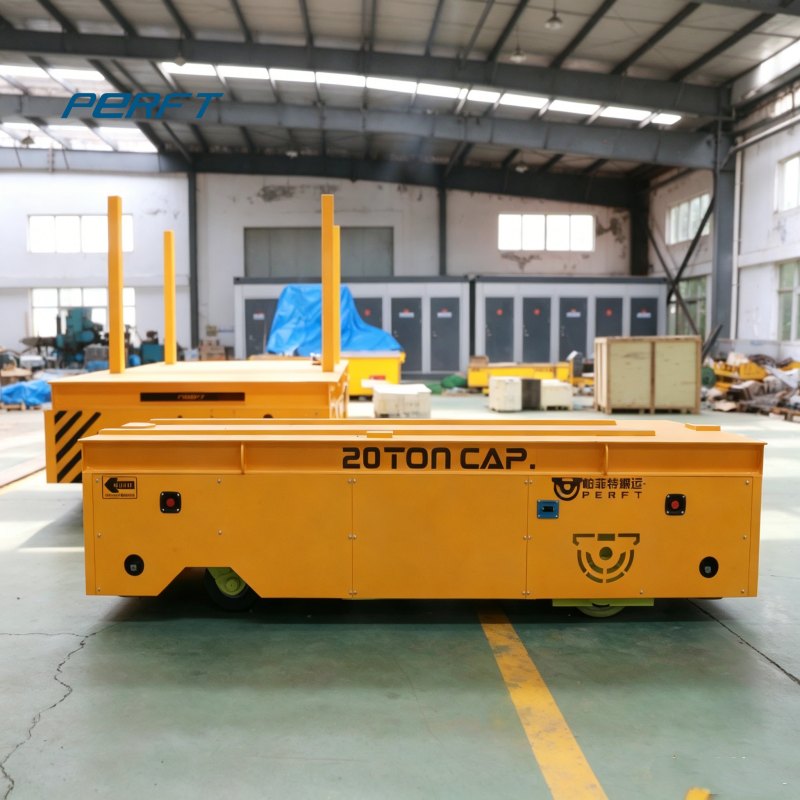
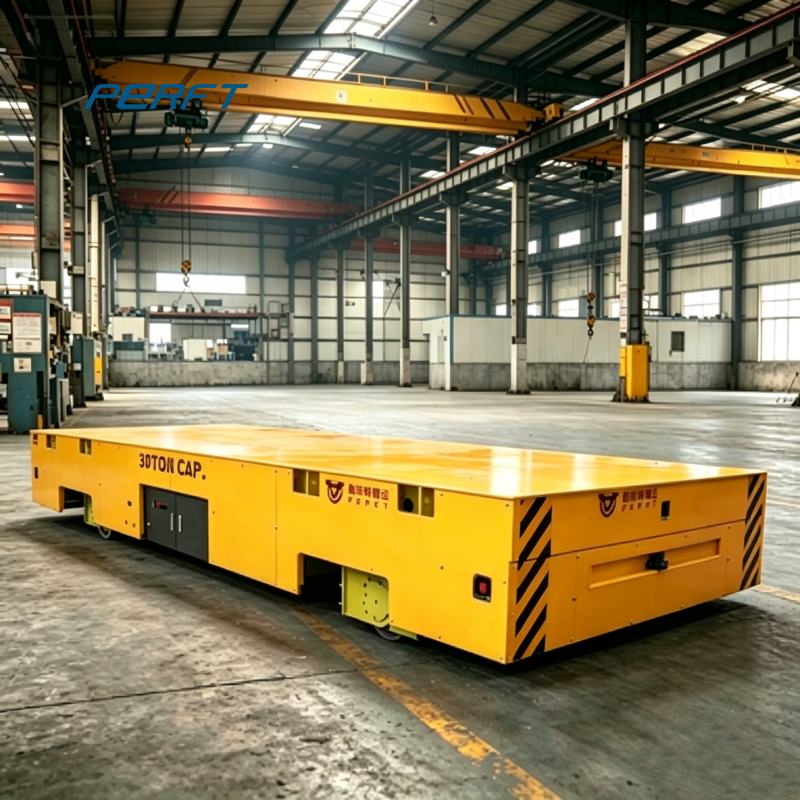
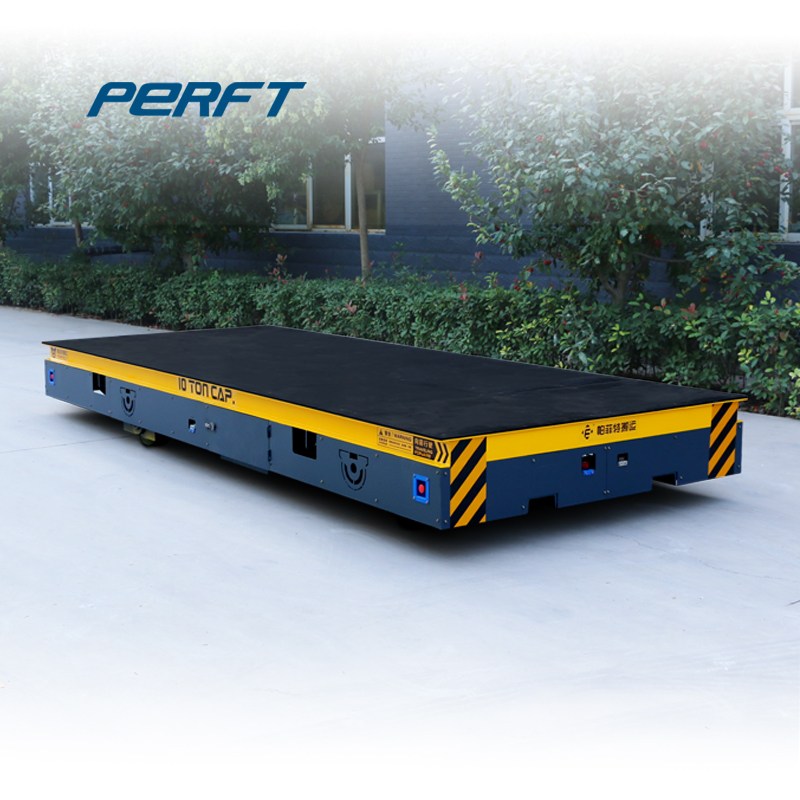
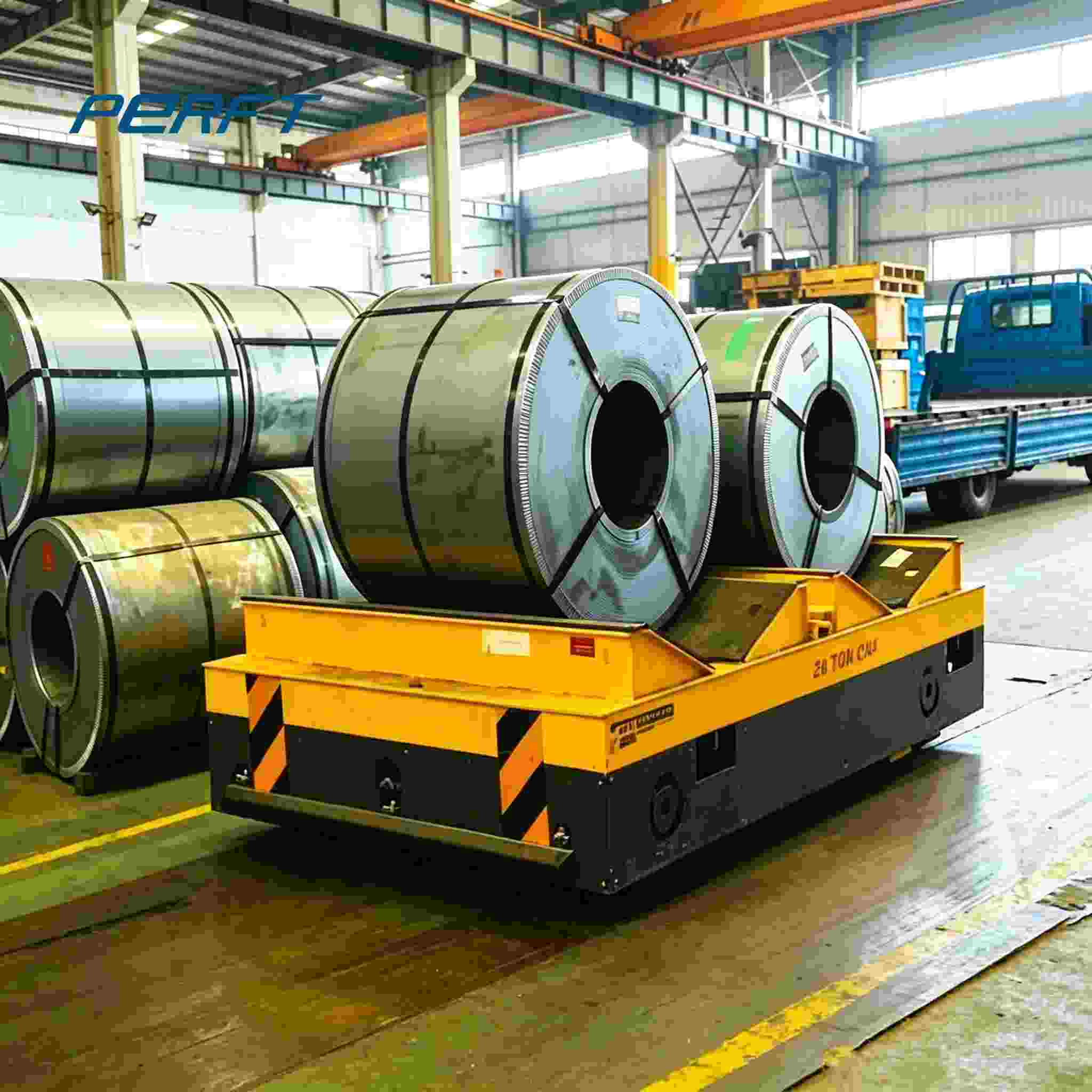
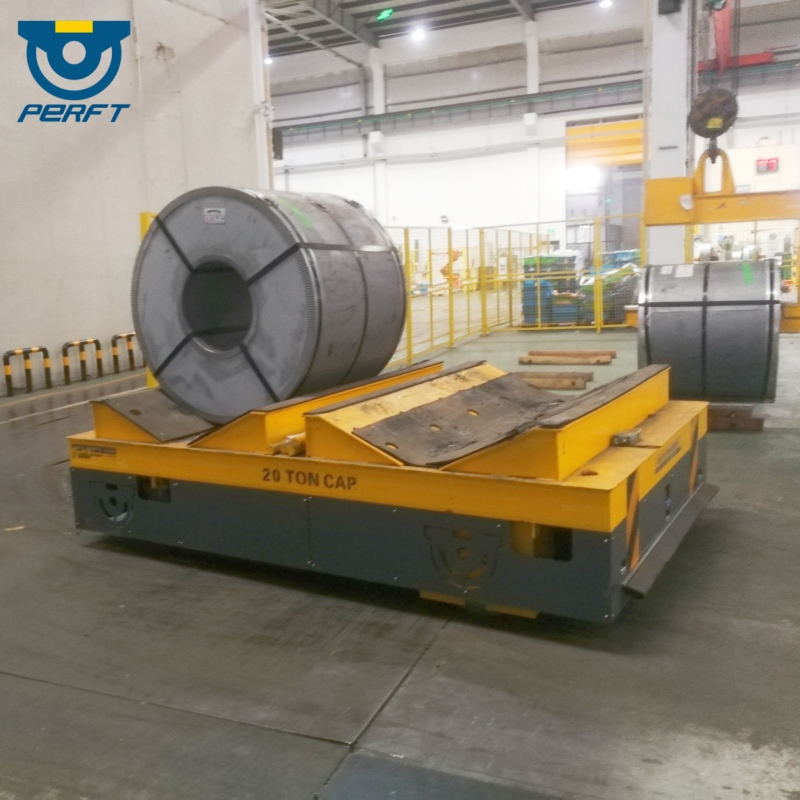
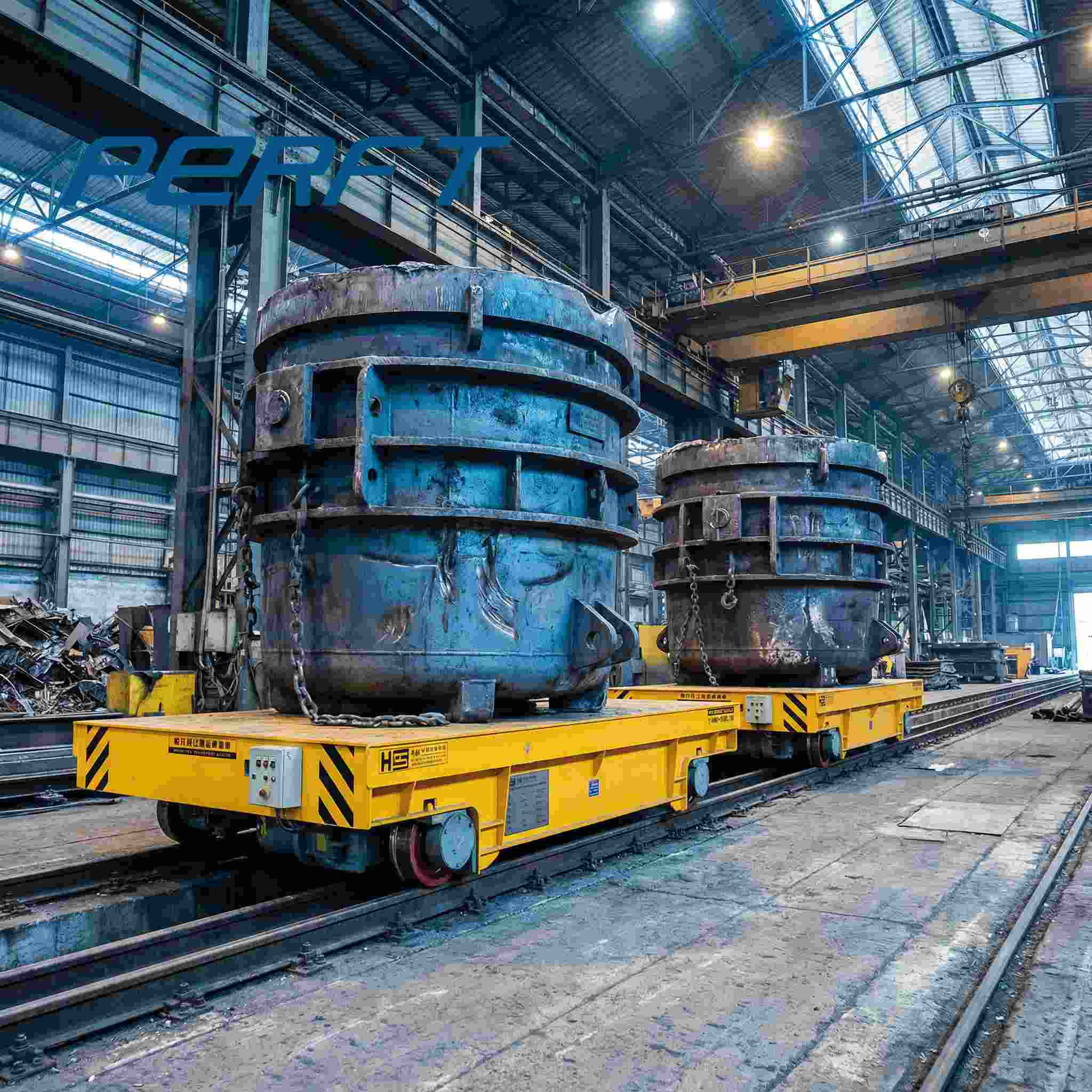
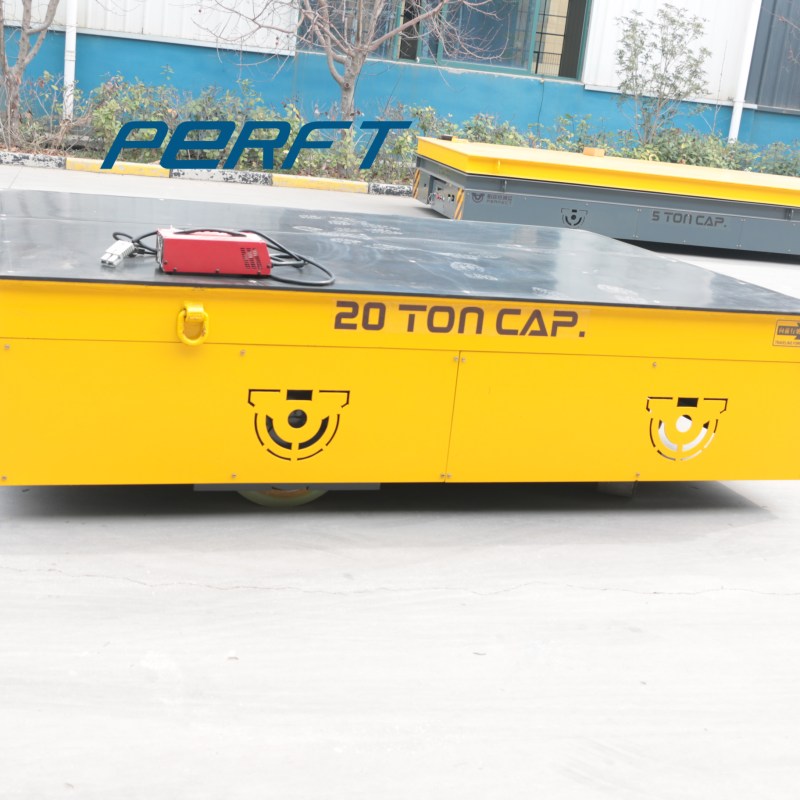
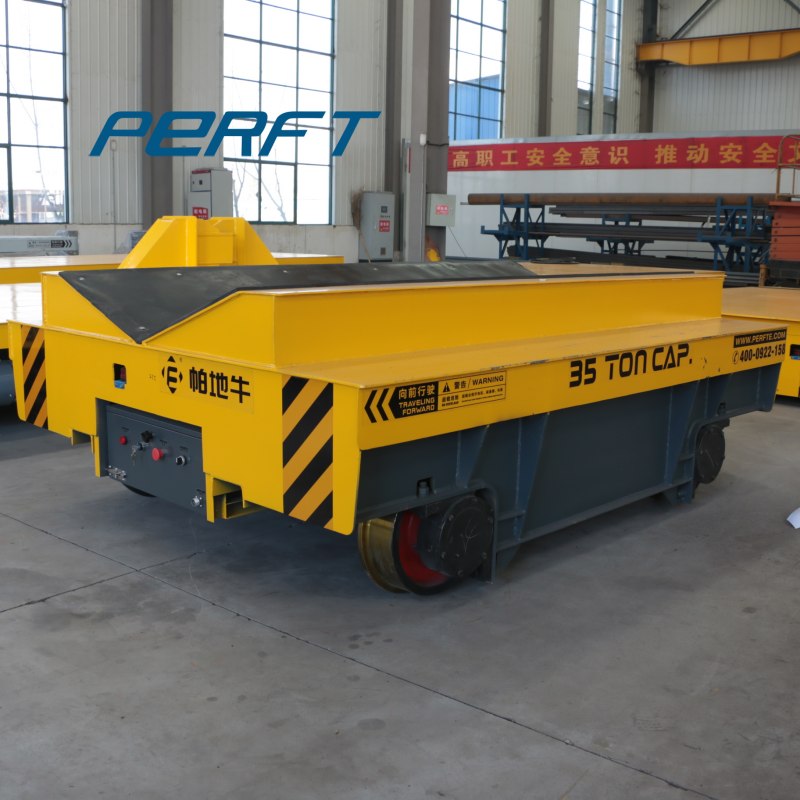
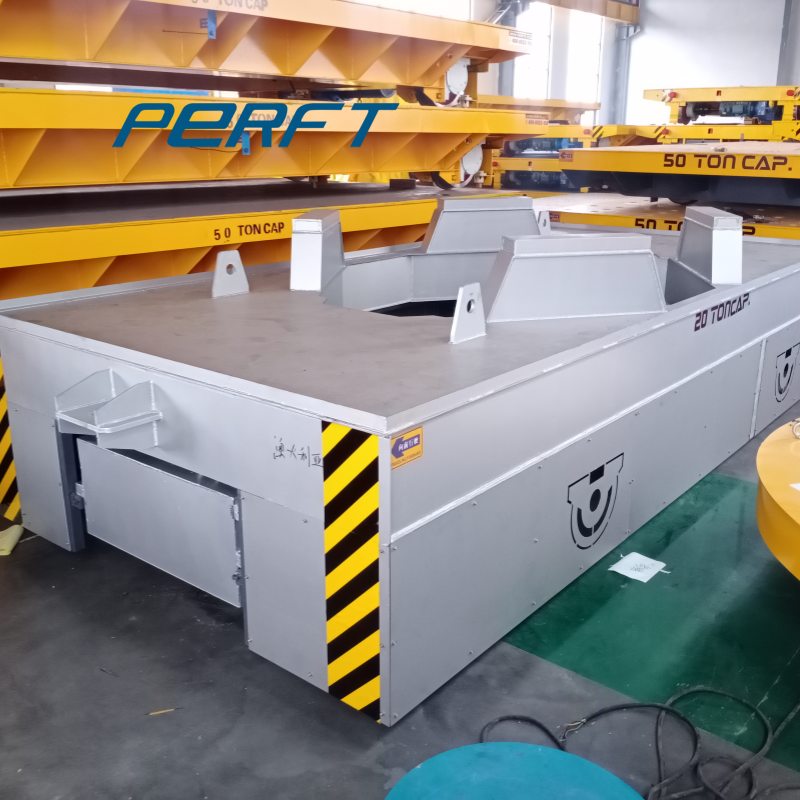
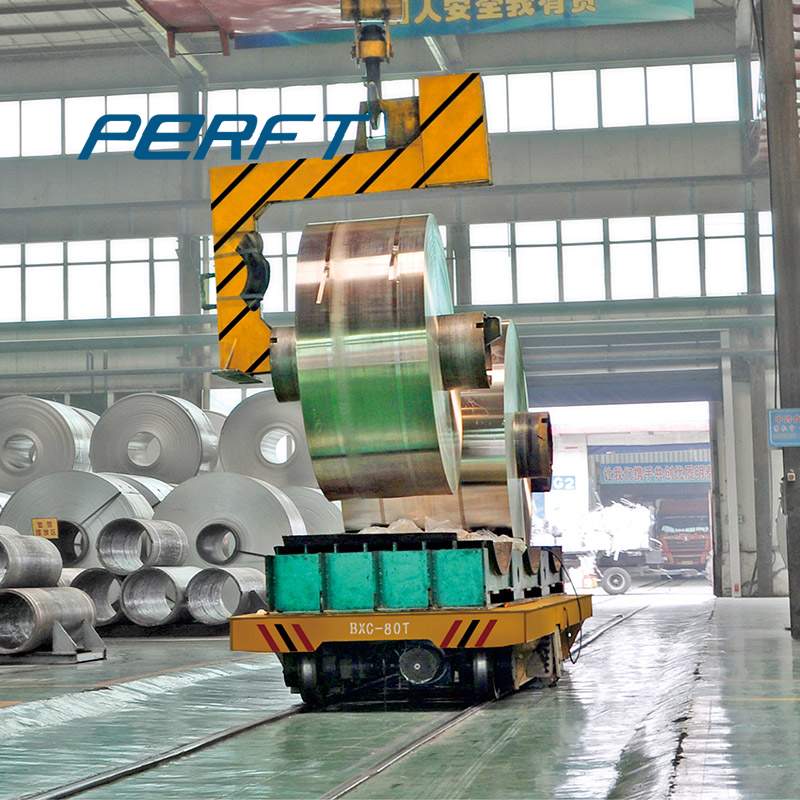
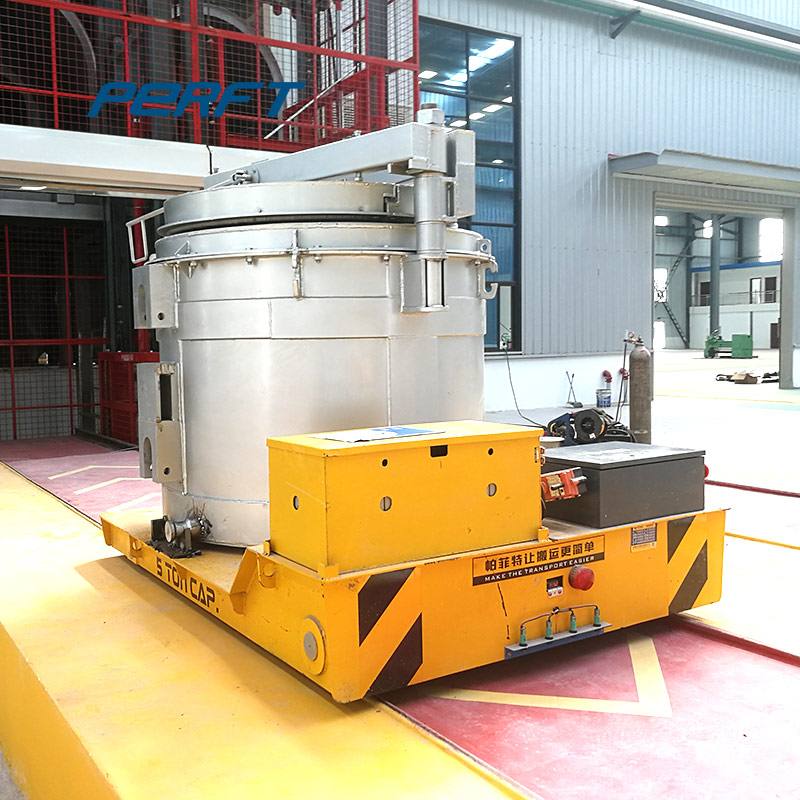
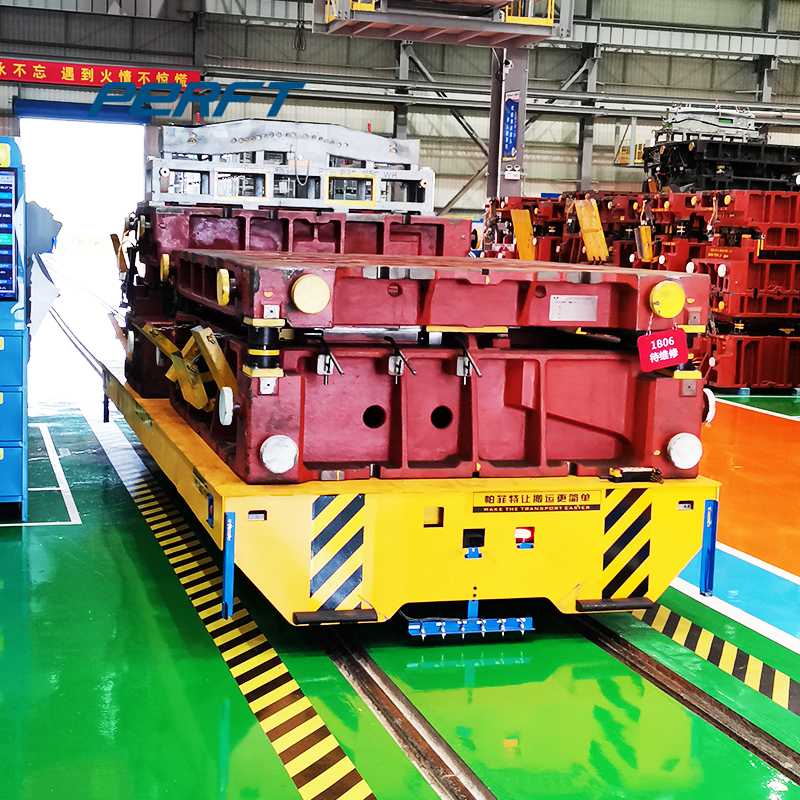
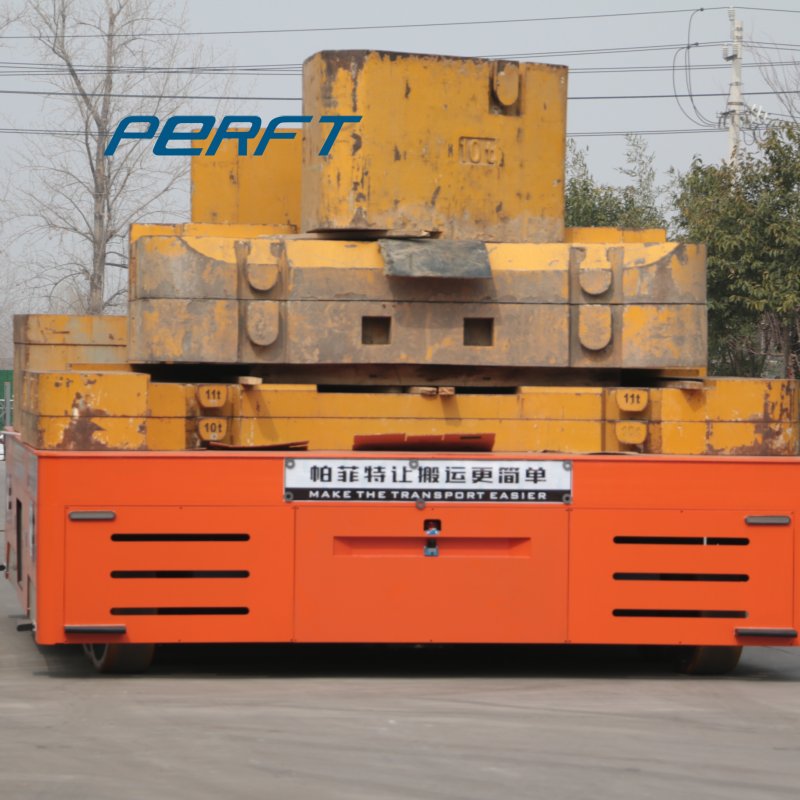
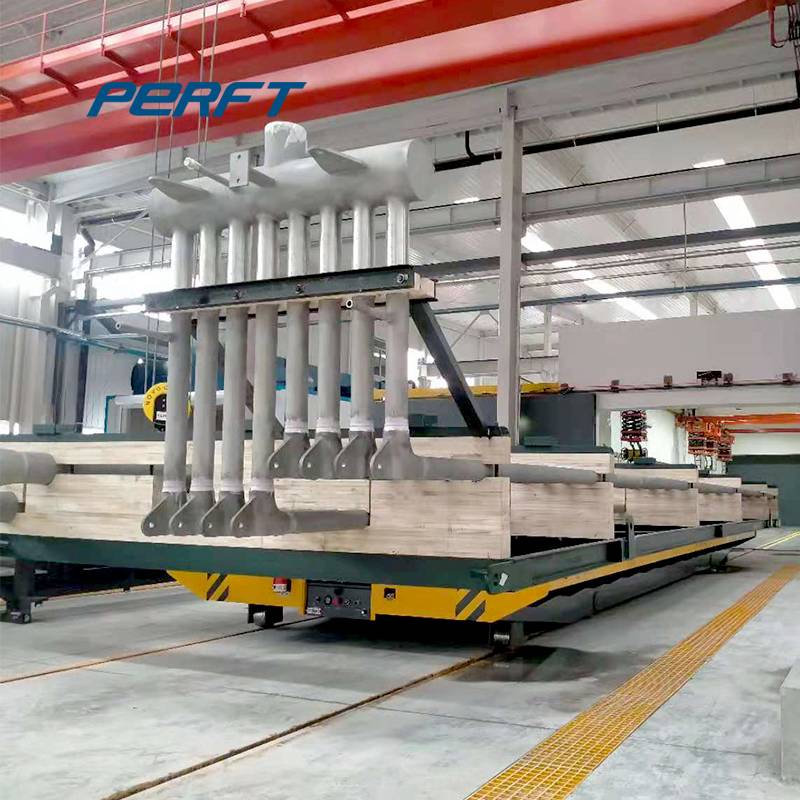
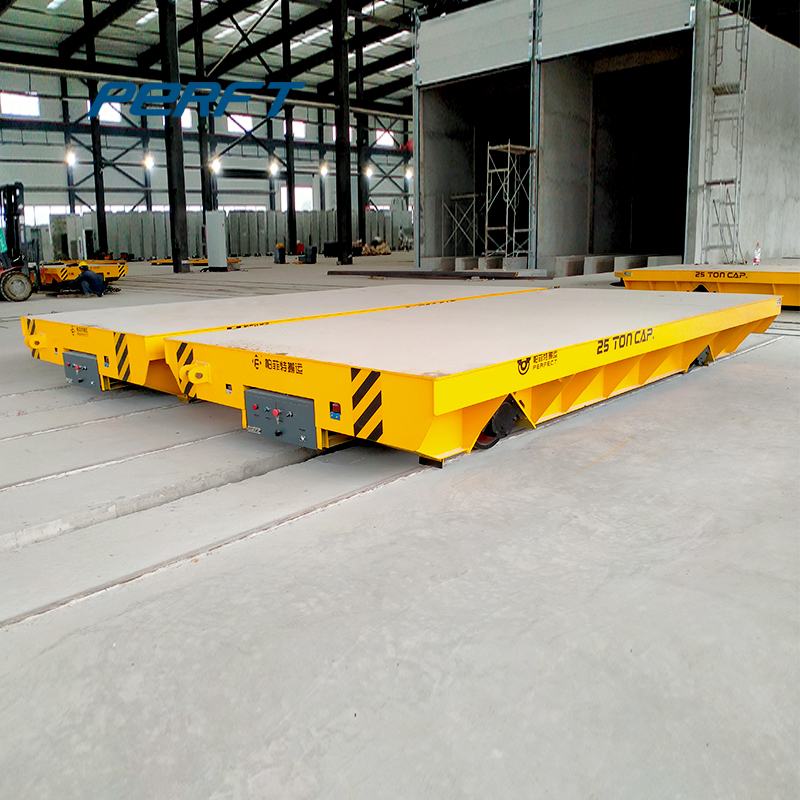
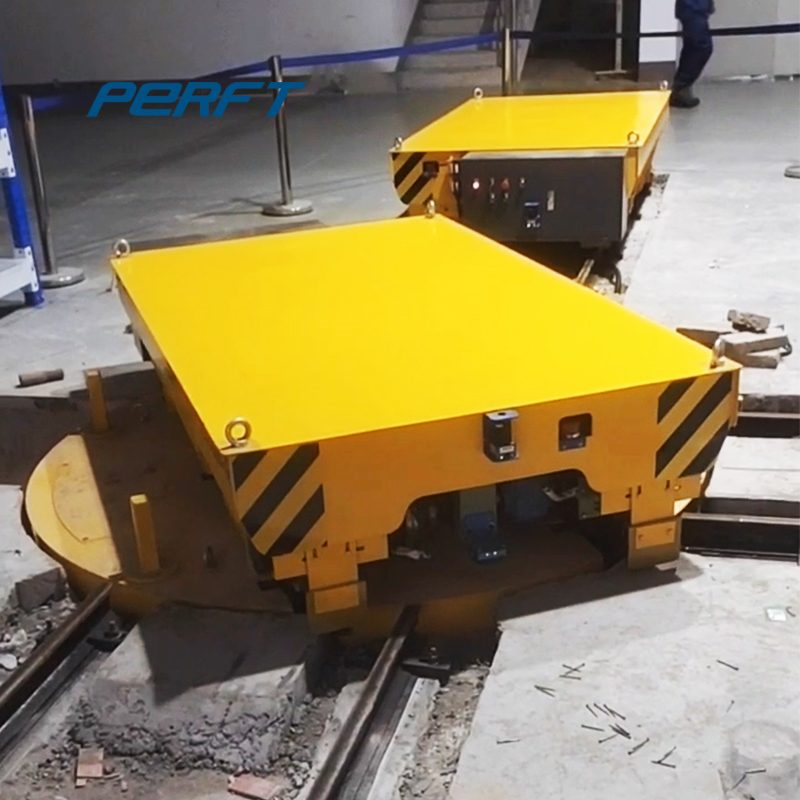
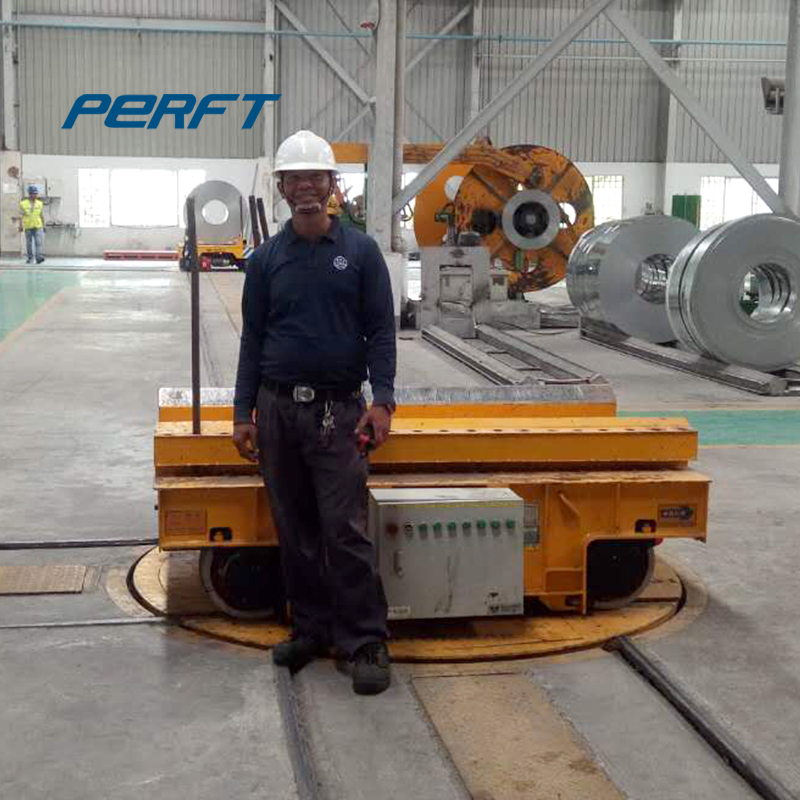
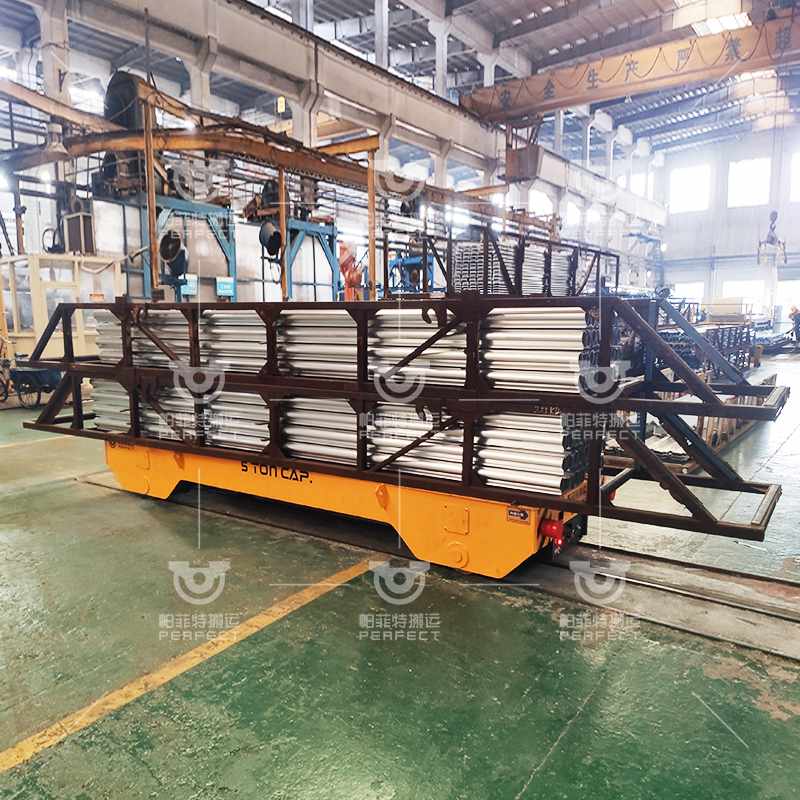
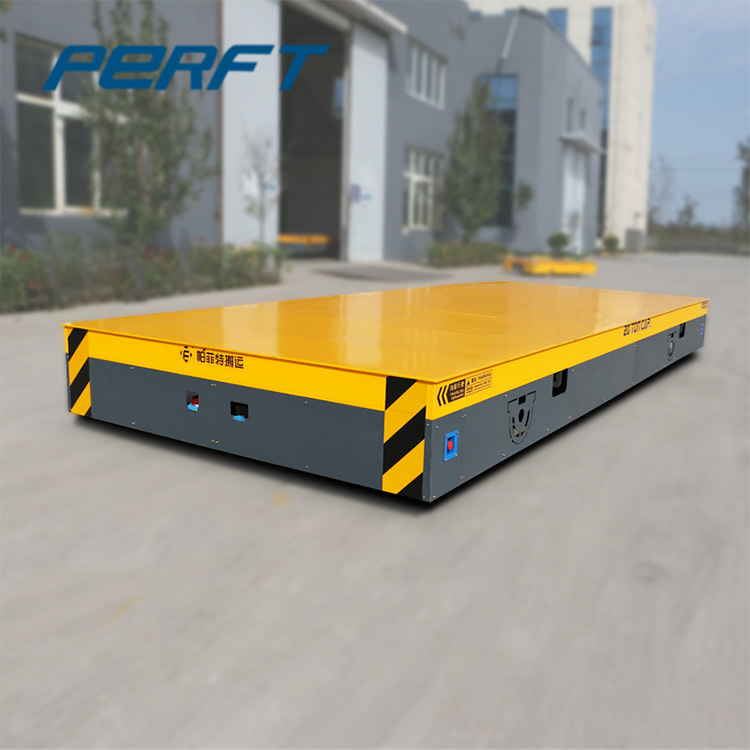
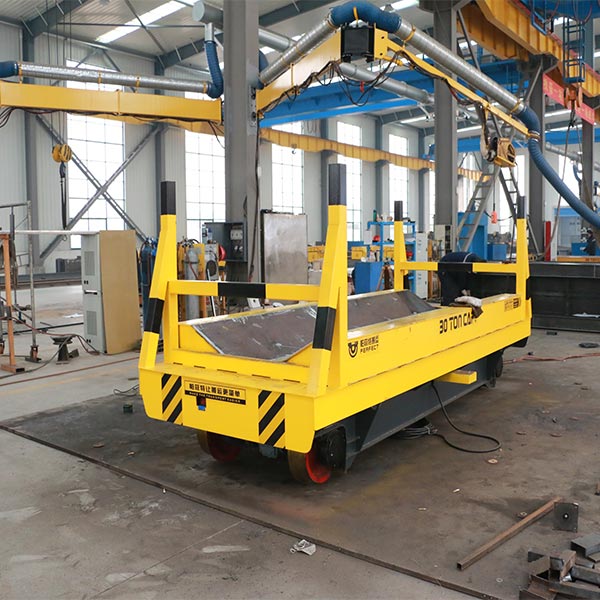
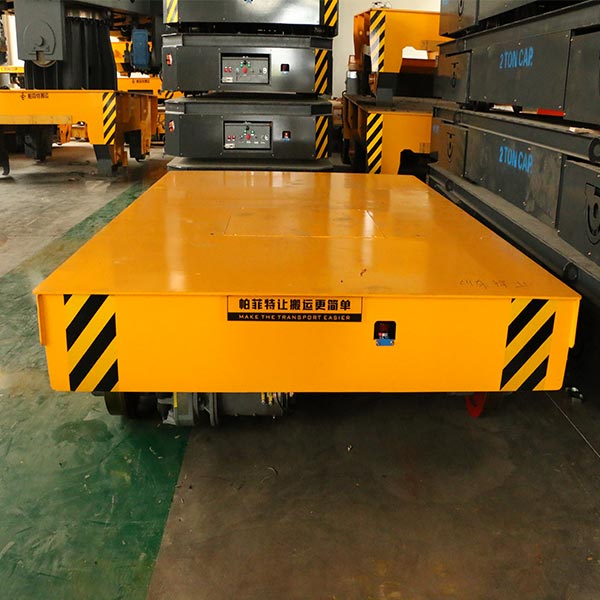
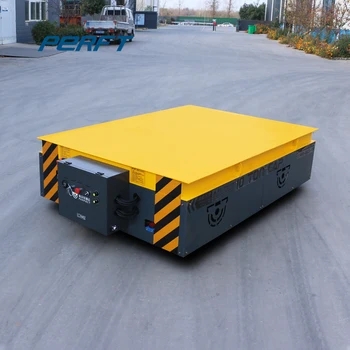
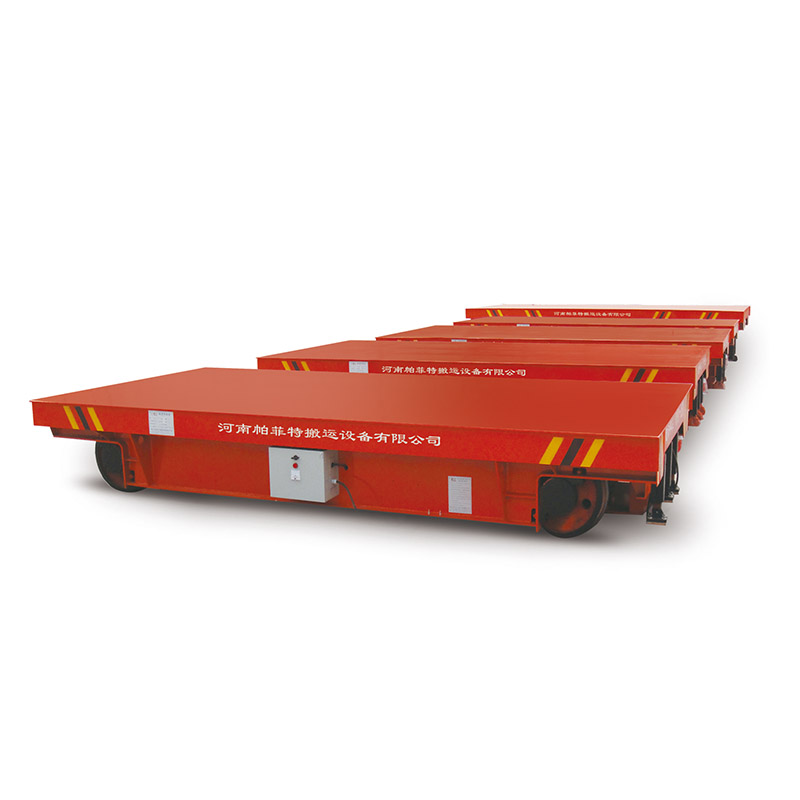
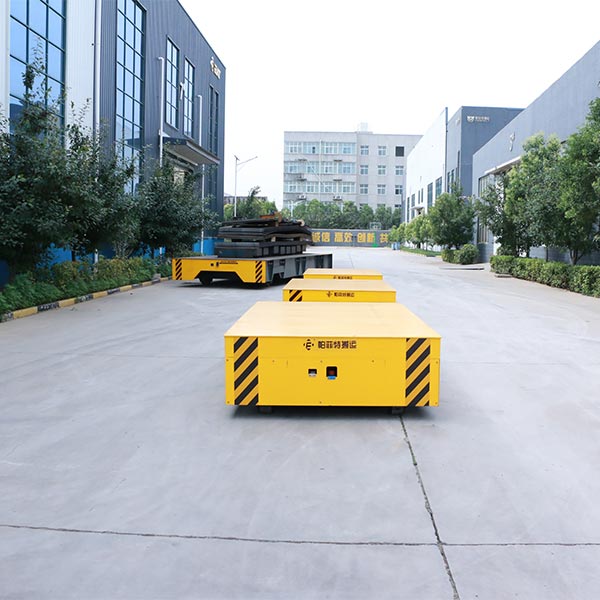
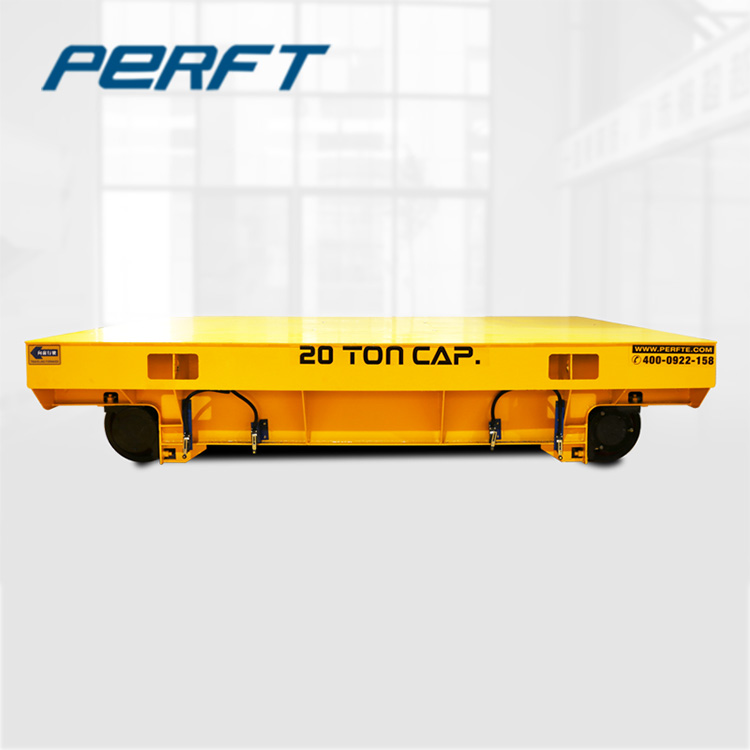
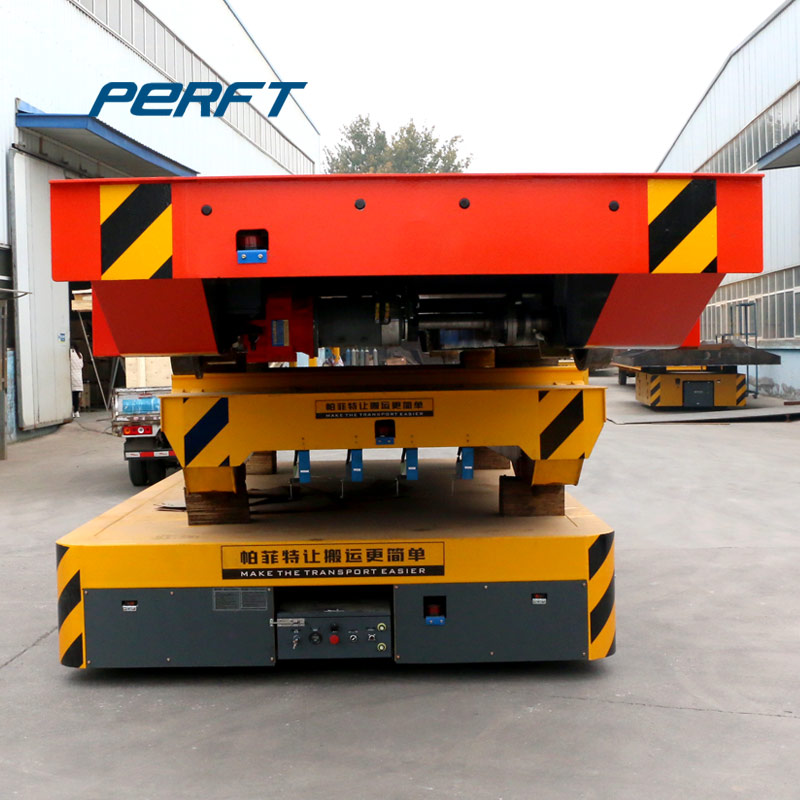
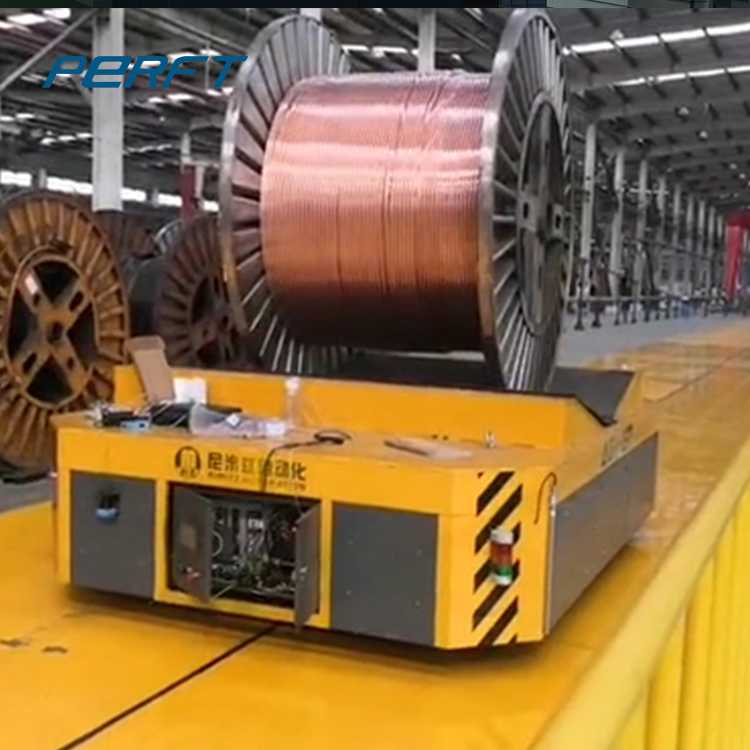
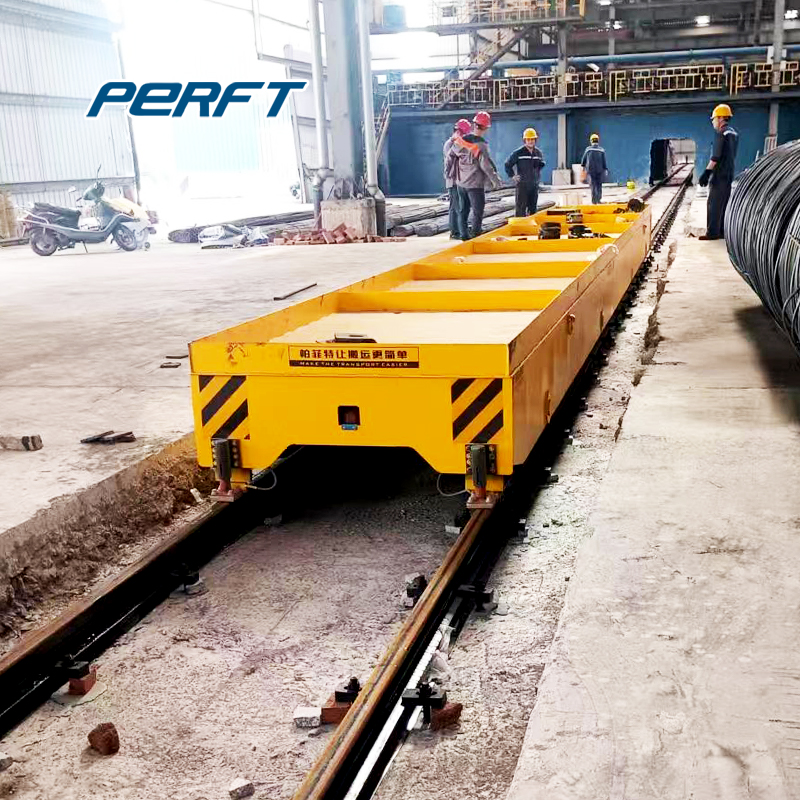
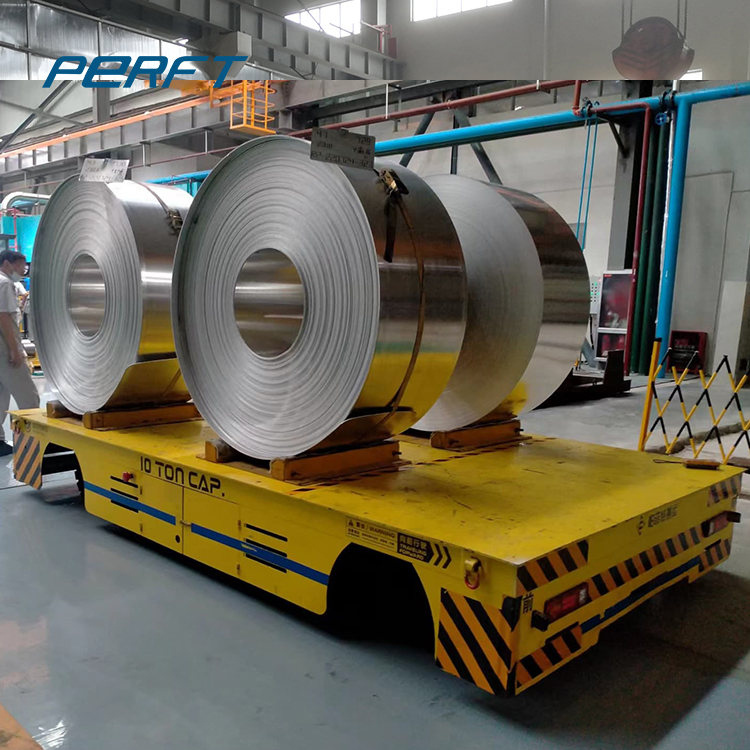
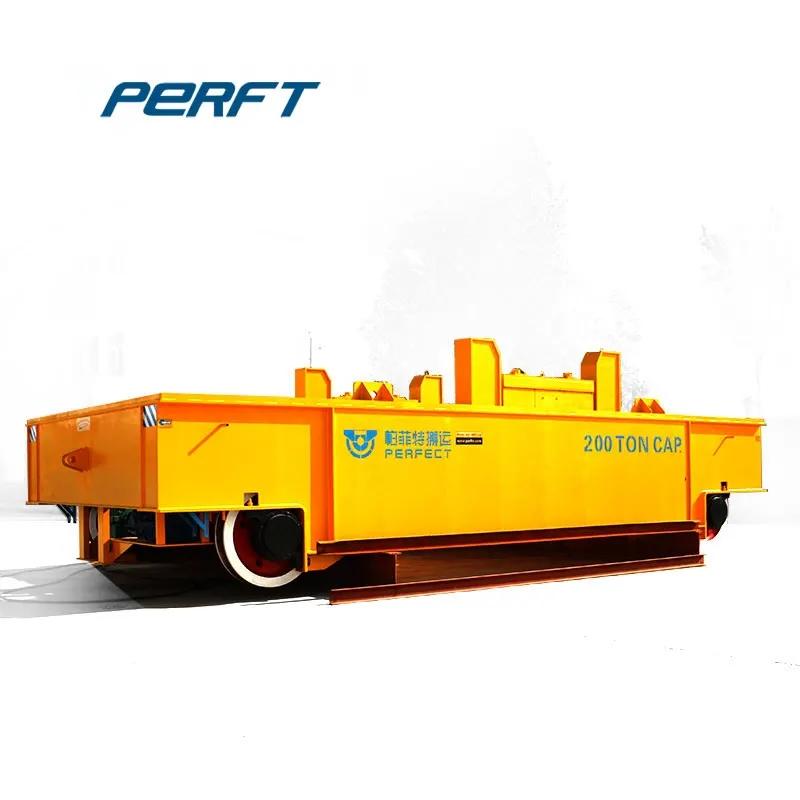
One standout advantage of this rail flatbed cart is that it can tow trailers and carry loads on its own deck. It is fitted with a quick-connect coupler, which hooks up multiple unpowered flatbed trailers in minutes to form a transport convoy for bulk shipments. Load capacity can be tailored from 5 tons up to 100 tons to match on-site demands. Its spacious built-in platform also handles single heavy-weight items for short-haul moves. Apart from daily material delivery, it can relocate idle flatcars or carry equipment for emergency repairs, so one machine covers several transport jobs.
Multiple Power Options for Non–stop Operation
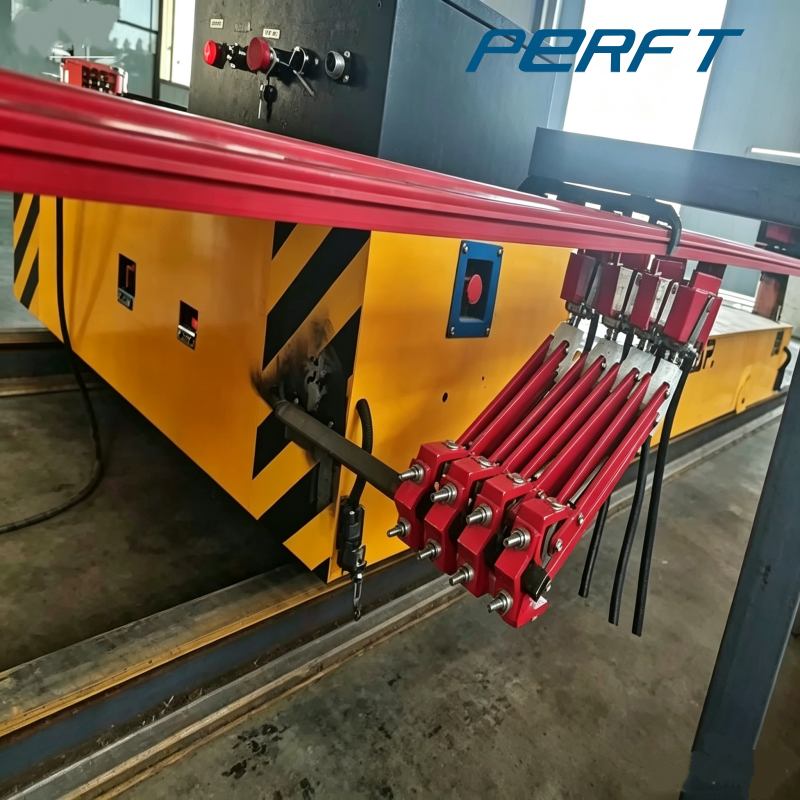
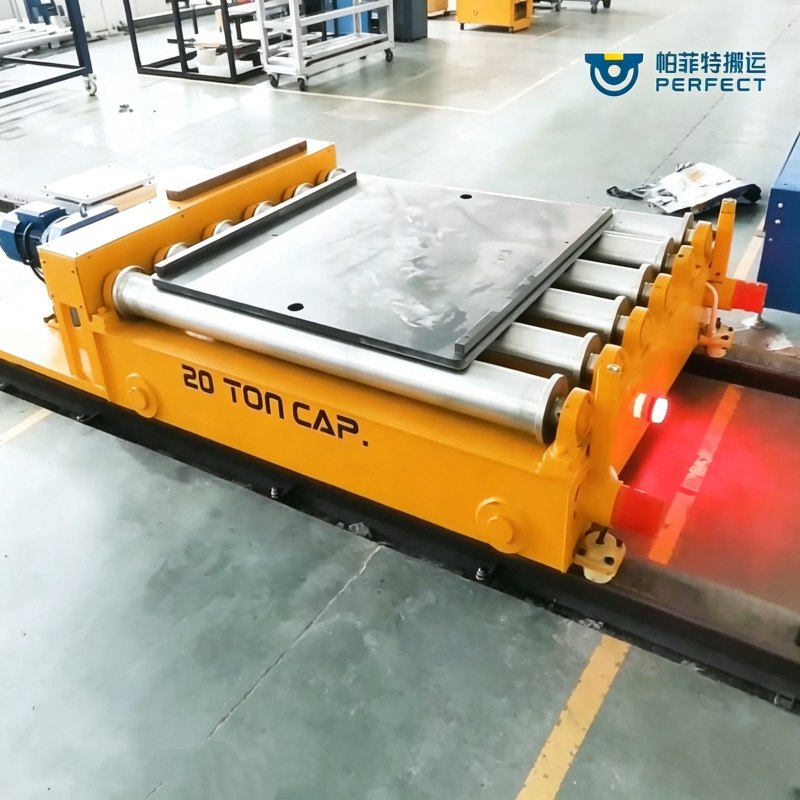
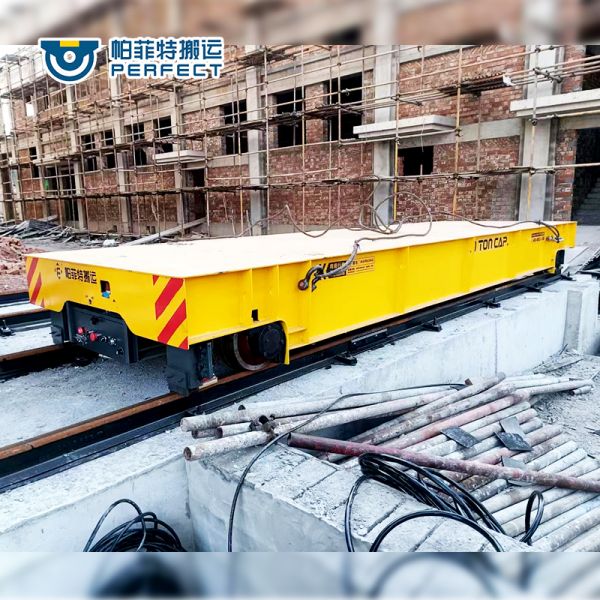
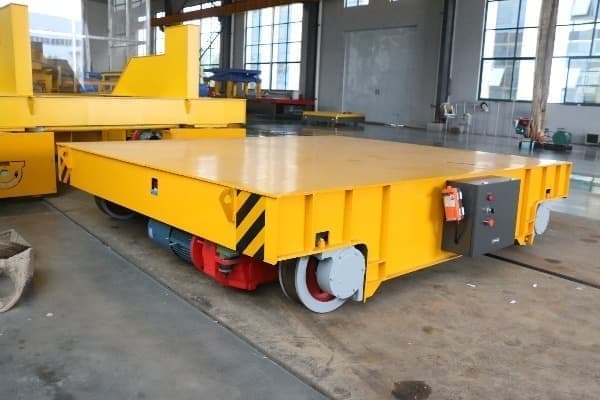
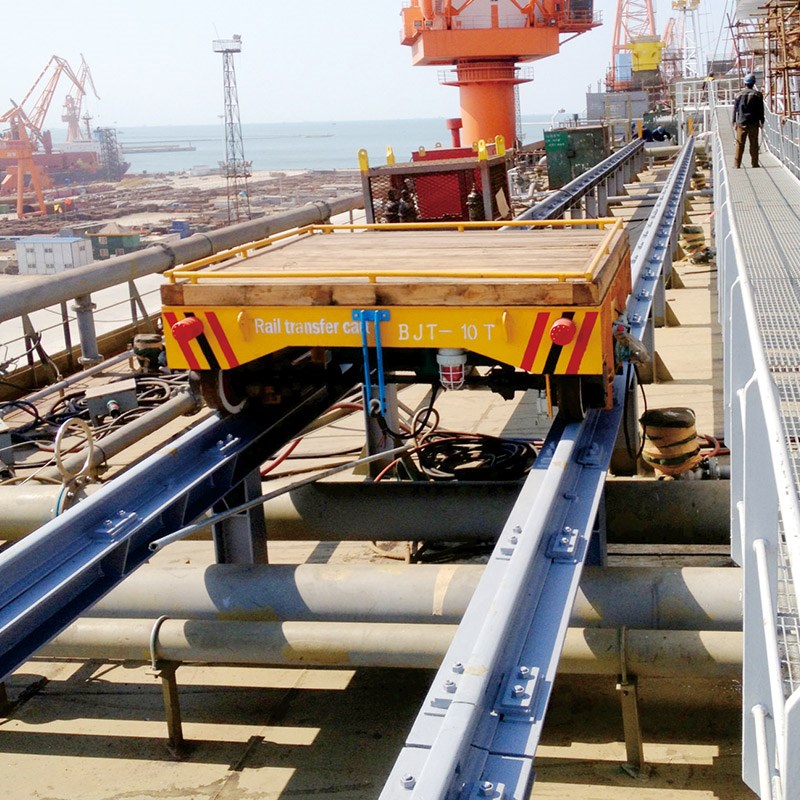
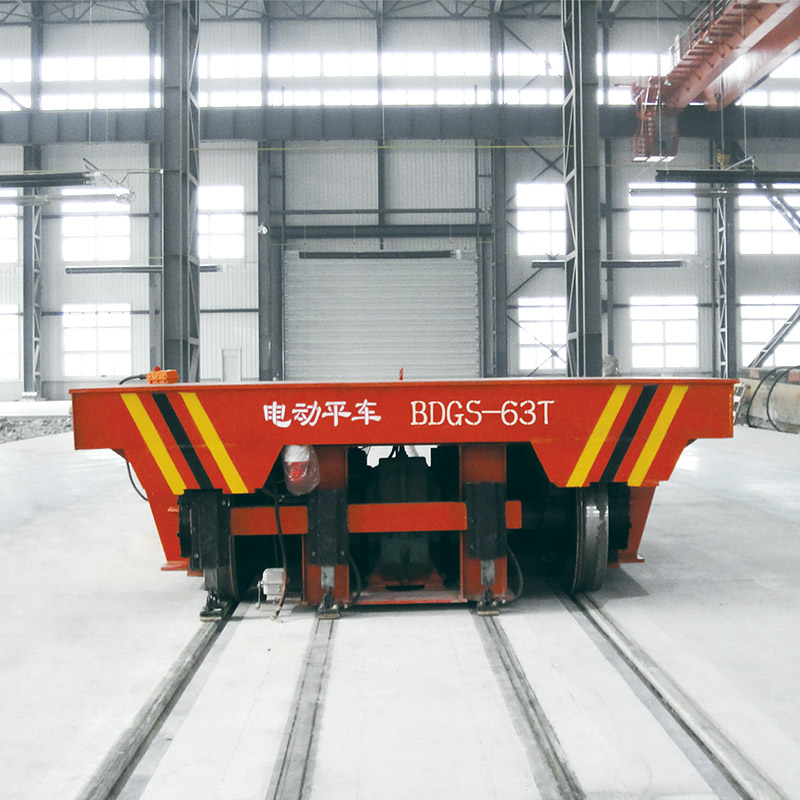
The standard version runs on 380V cable power. Cables run between the two rails and stay less than 0.6 meters off the ground. Cable ends are firmly fixed on the cart, so power remains stable while the vehicle moves back and forth for long-hour continuous work. If workshop layouts make cable laying difficult, you can switch to battery power or low-voltage rail power as alternatives. Different power schemes fit various factory wiring conditions well.
Custom Frame Design with Overload Protection
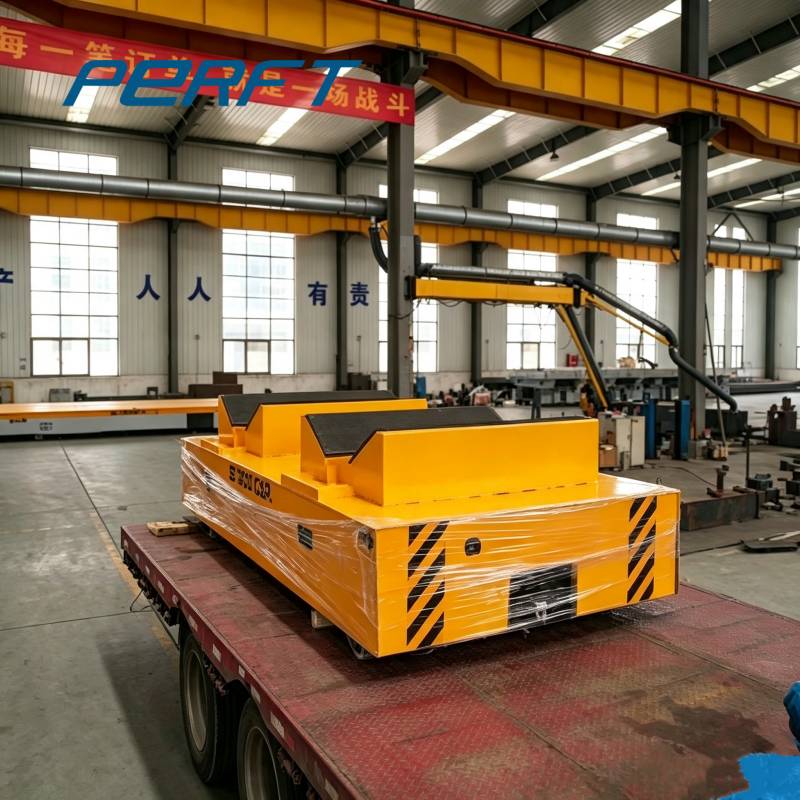
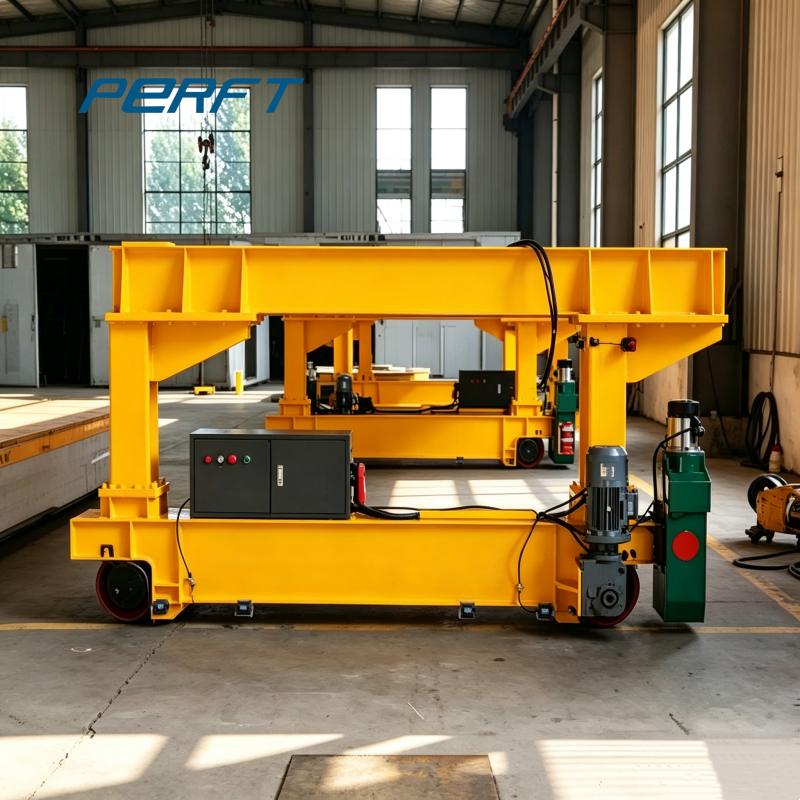
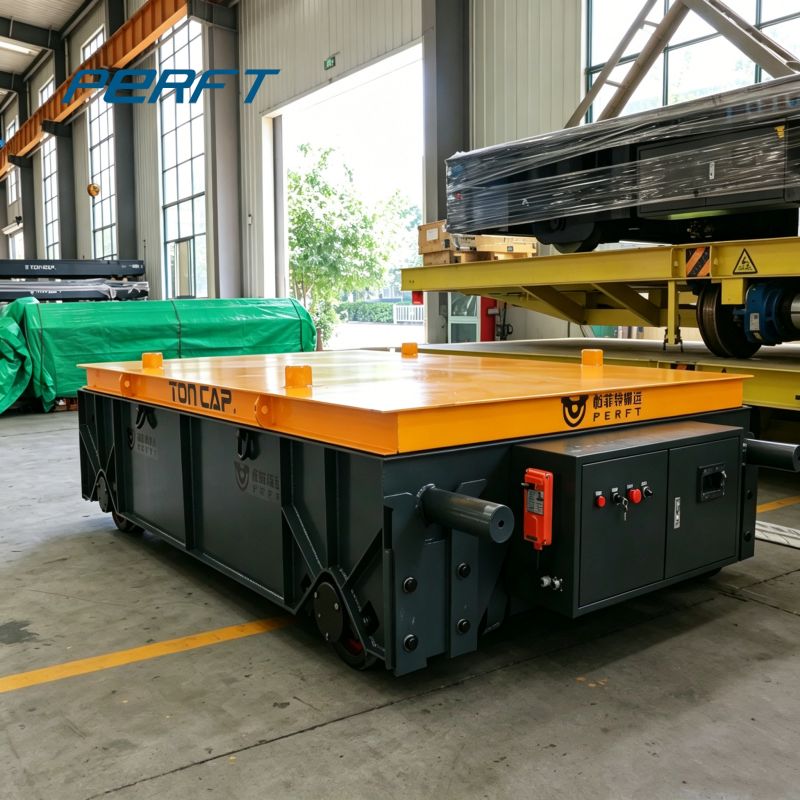
We adjust the cart structure according to existing rail lines on site, so it connects seamlessly with old tracks without major factory renovation. The whole frame is welded as a single piece, tough and resistant to deformation under heavy loads. A belt-driven system links motors and wheel axles and has built-in overload protection. It shuts down key components automatically if the cart gets stuck or overloaded, preventing motor damage. Equipped with variable frequency speed control, the cart accelerates and decelerates smoothly to avoid bumps and protect fragile cargo.
Dual Control Modes and Smart Upgrade Available
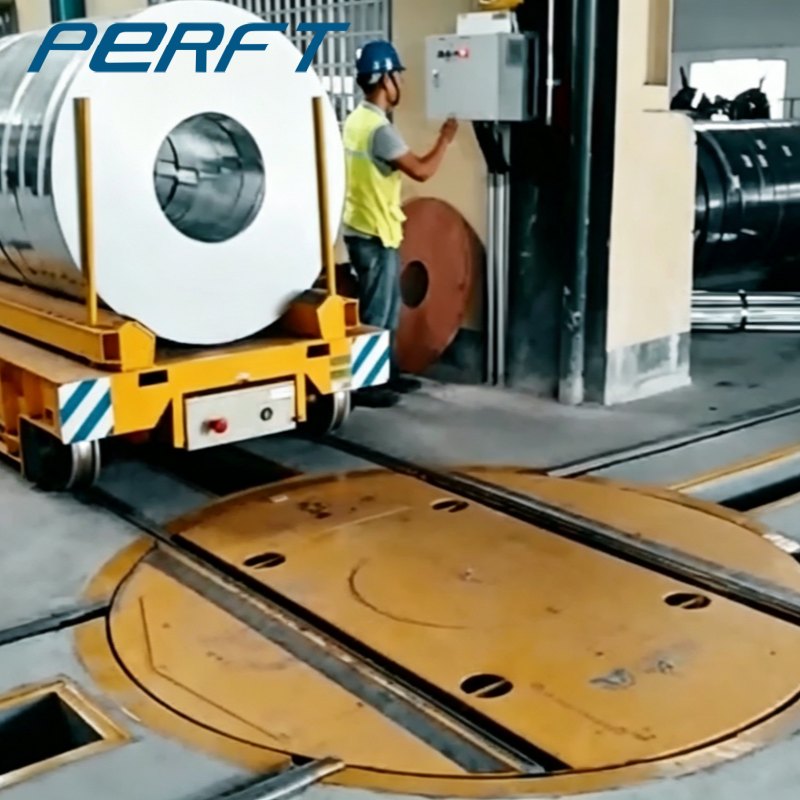
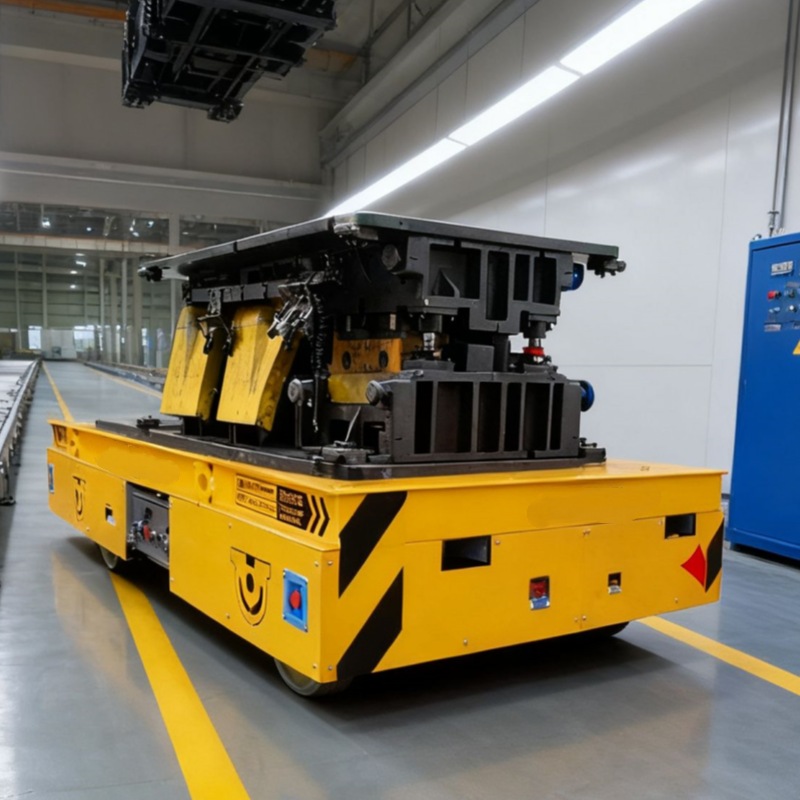
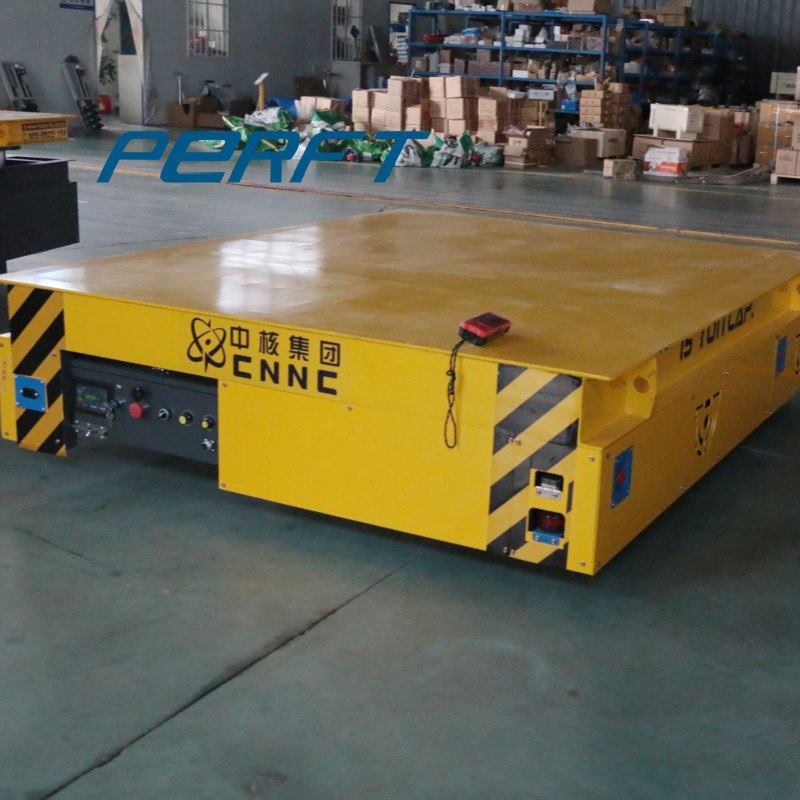
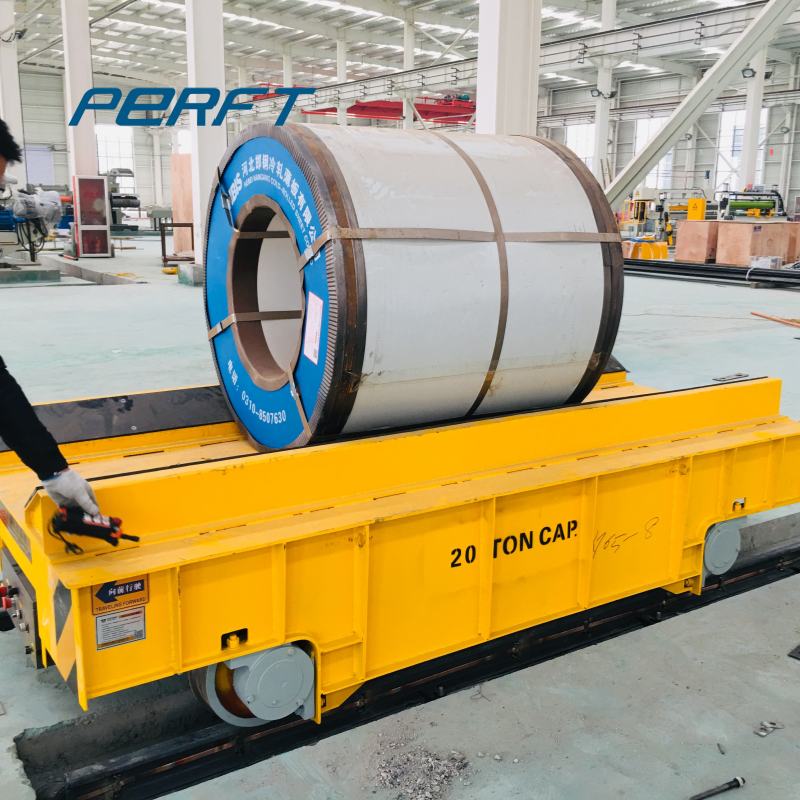
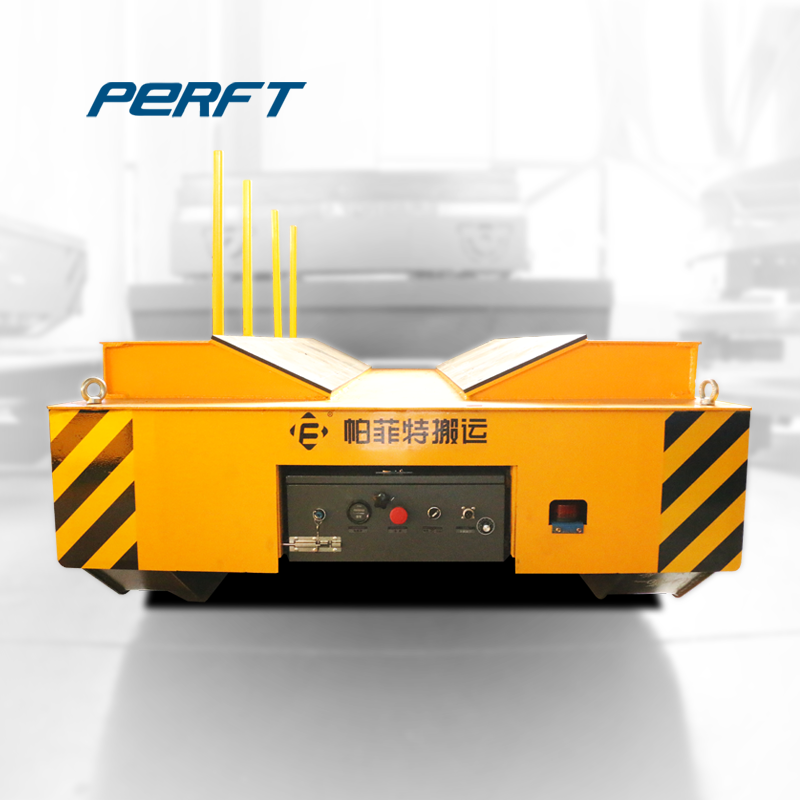
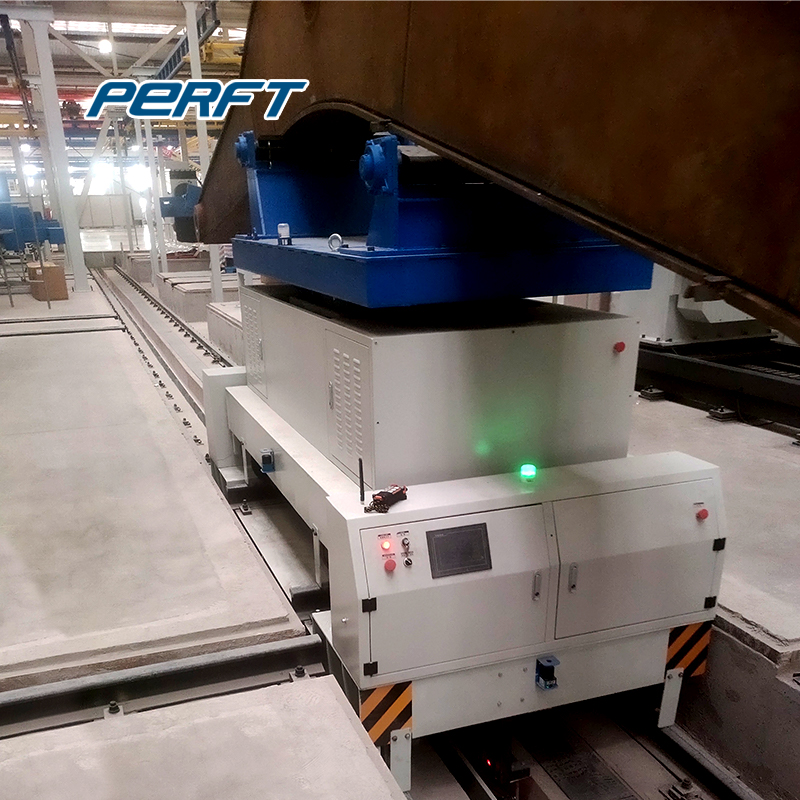
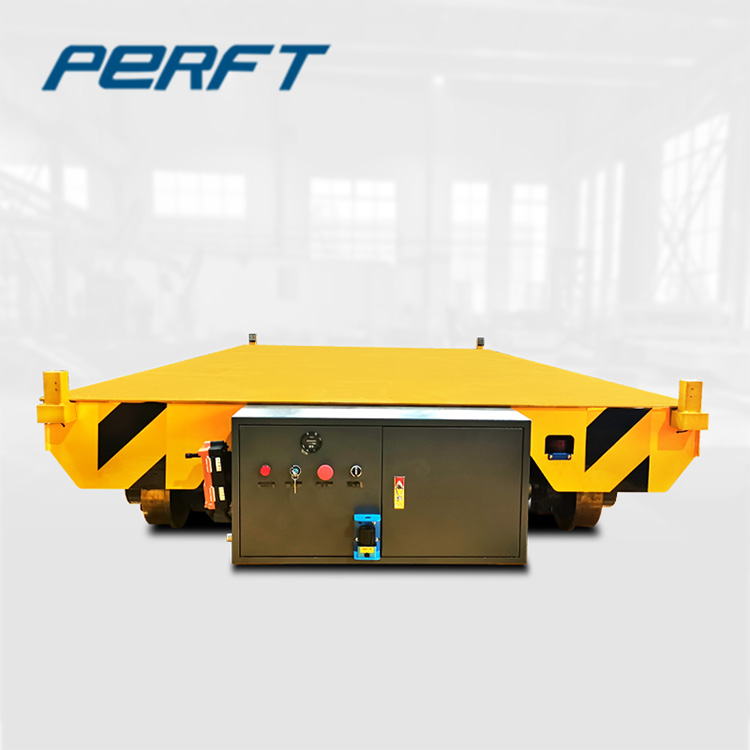
Operators can drive the cart either by wired handheld control or wireless remote control. Just one worker is enough to manage a whole line of connected flatbeds and save labor costs. Basic models support manual point-to-point transport. Higher-end configurations add landmark sensors and automatic positioning stops to reduce human operation further. The cart can even connect with AGV scheduling systems to achieve unmanned transport and support factories upgrading to smart production lines.
Full-range Safety Features for Harsh Working Conditions
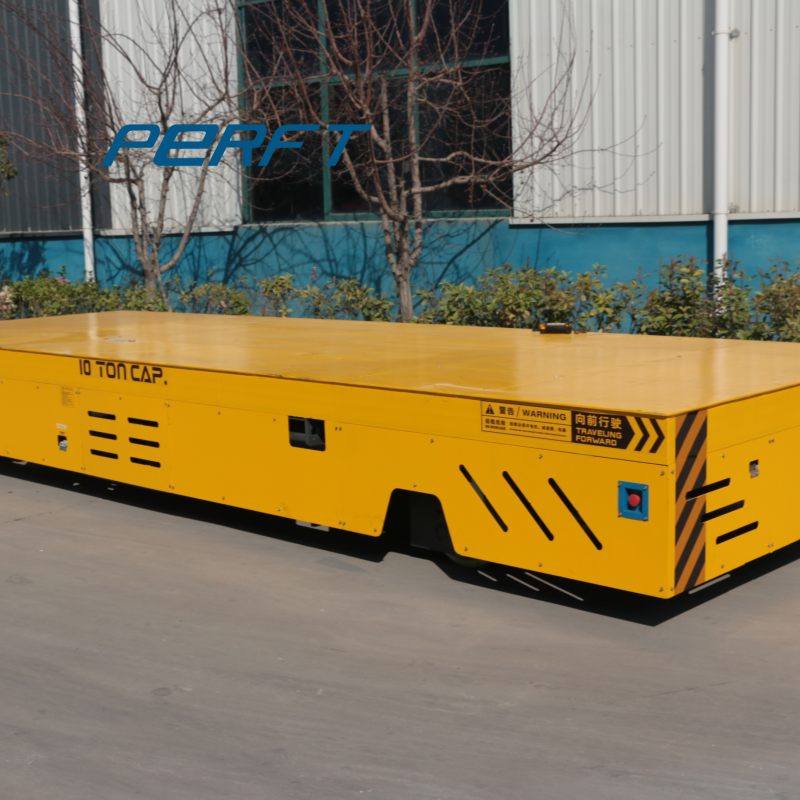
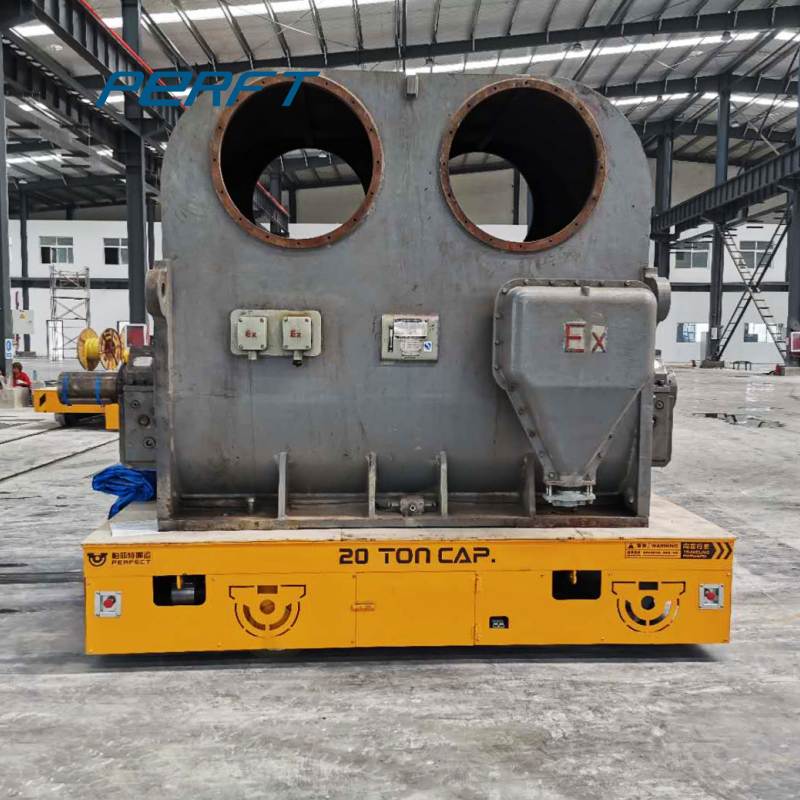
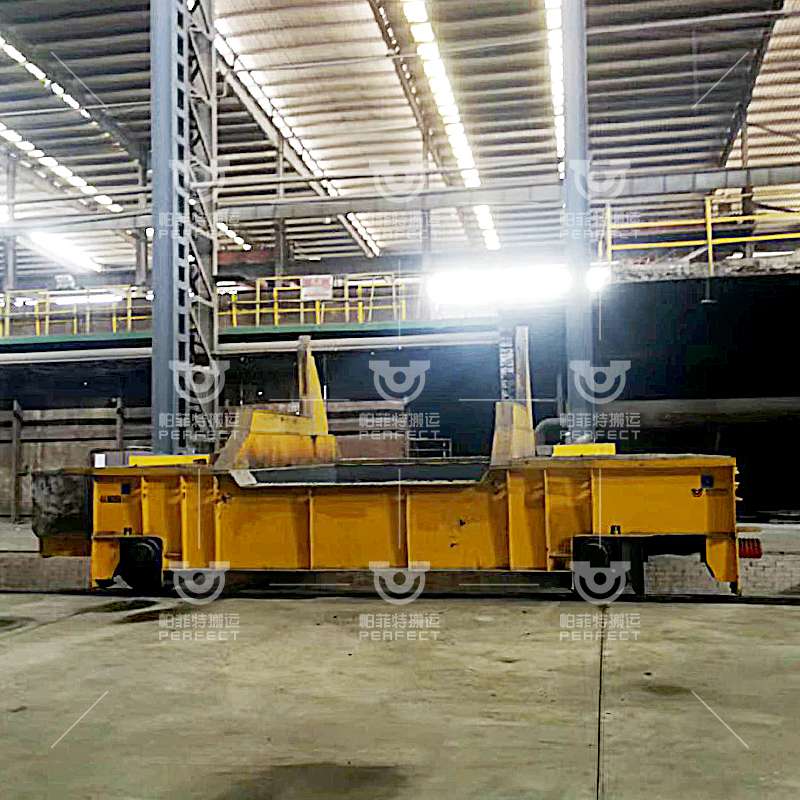
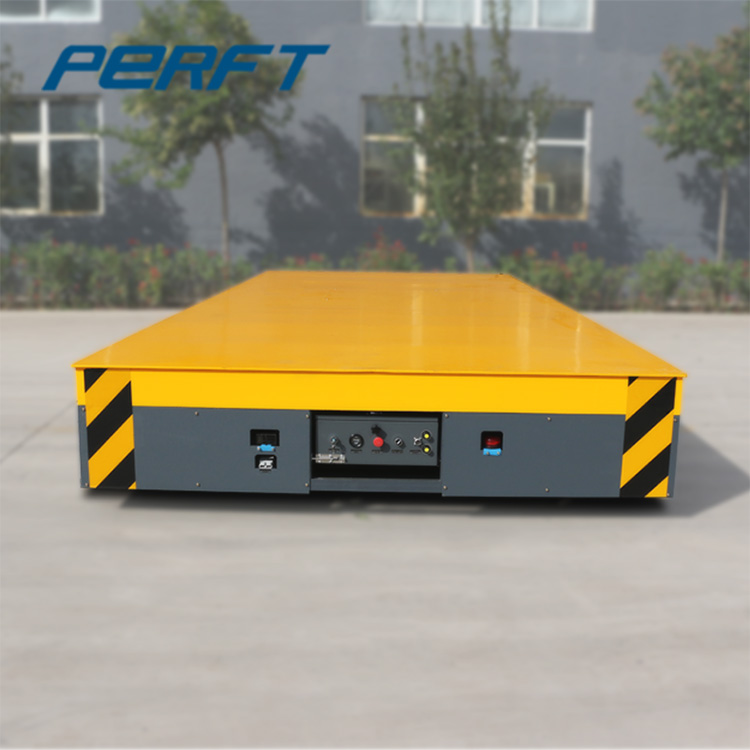
Safety is fully guaranteed. Standard safety parts include obstacle detection with auto-stop, sound-light warning lights, and end buffers. Emergency stop buttons, rail limit switches, plus mechanical and electromagnetic dual brakes are also installed. The dual brake system holds the cart firmly on slopes and prevents unwanted rolling. For special industries, explosion-proof, dust-proof, and high-temperature-resistant versions are available. They work reliably in foundries, smelting workshops, and chemical plants with tough environments.
Optional Extra Attachments to Broaden Usage
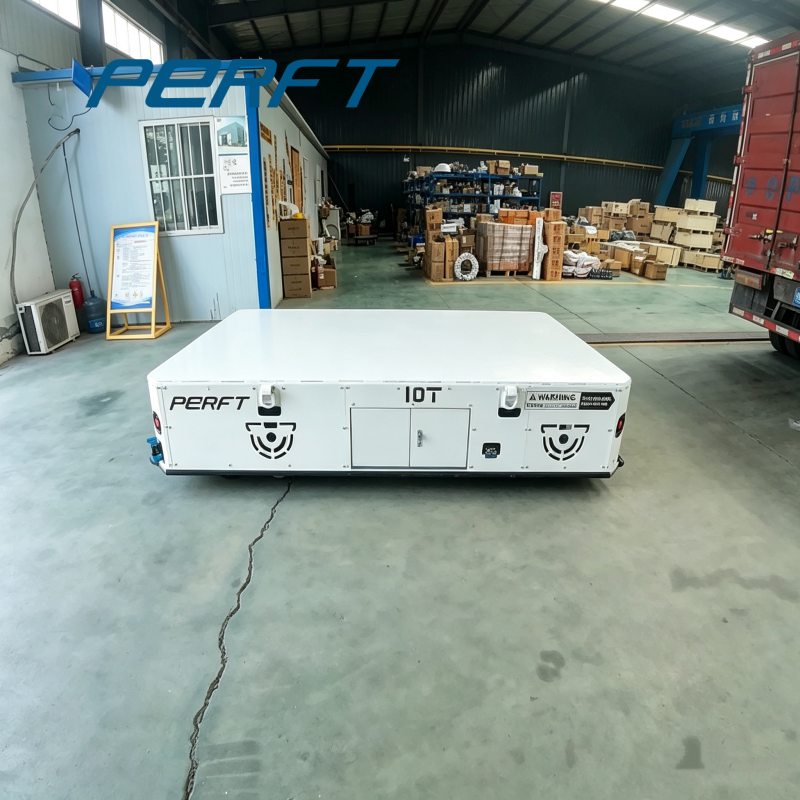
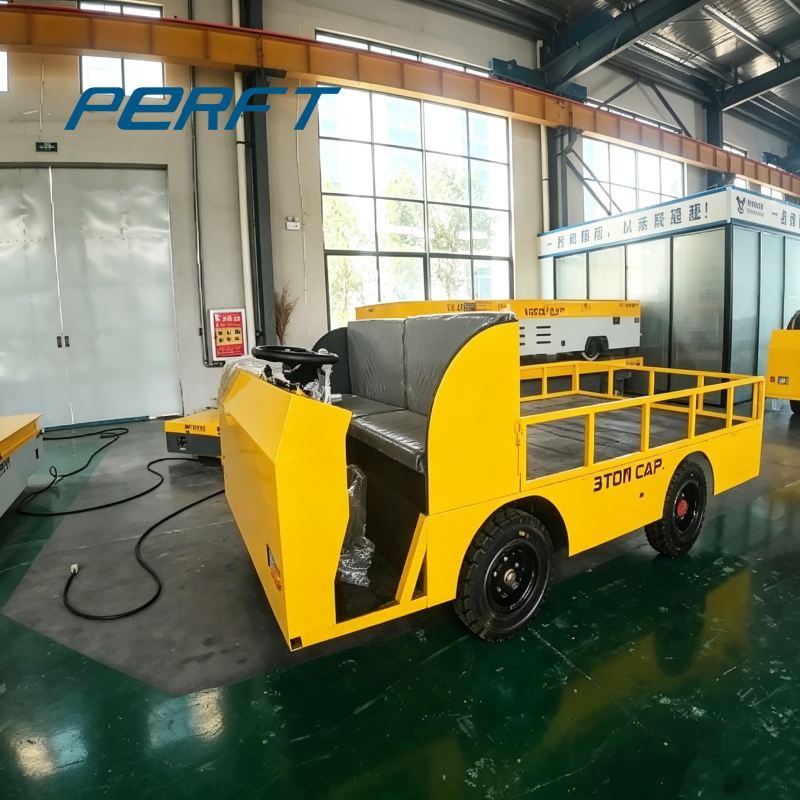
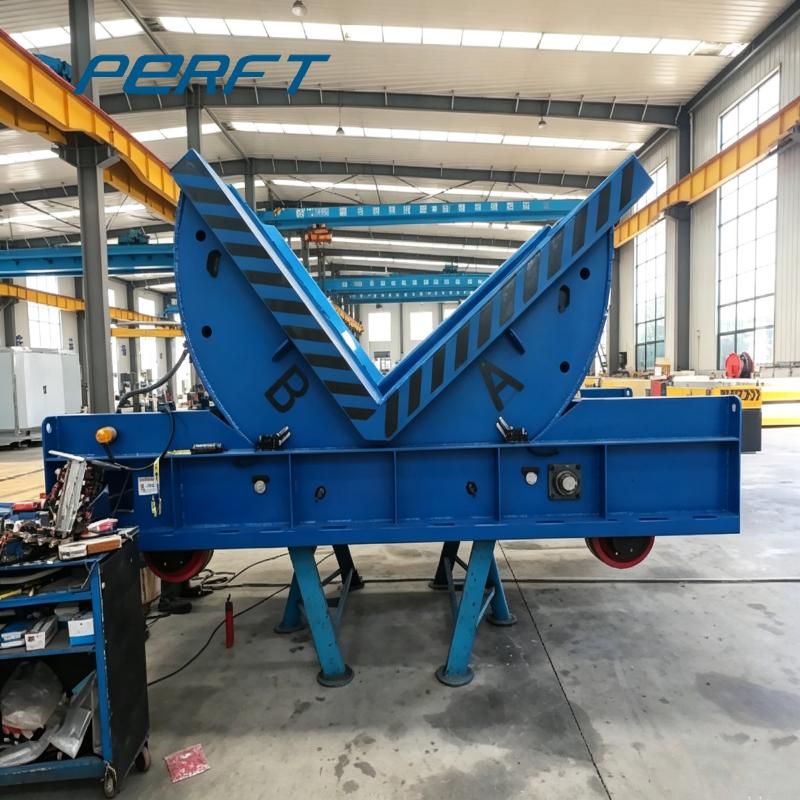
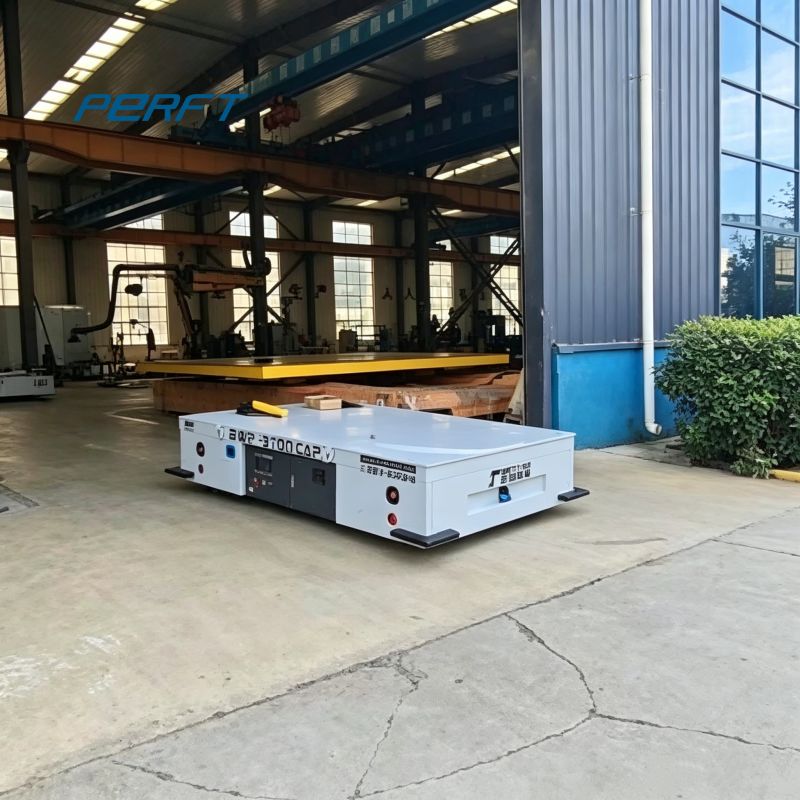
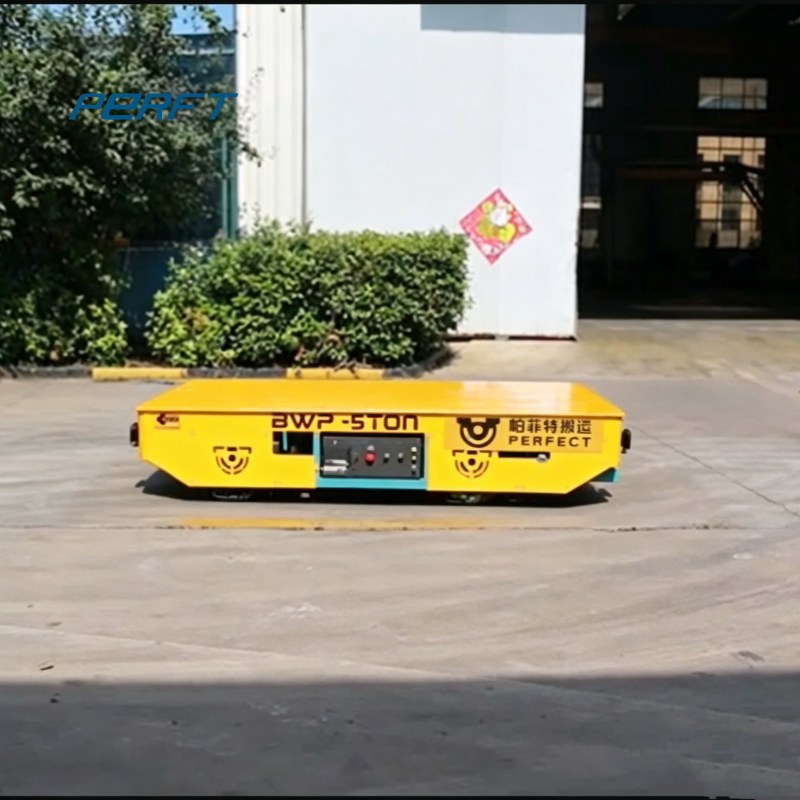
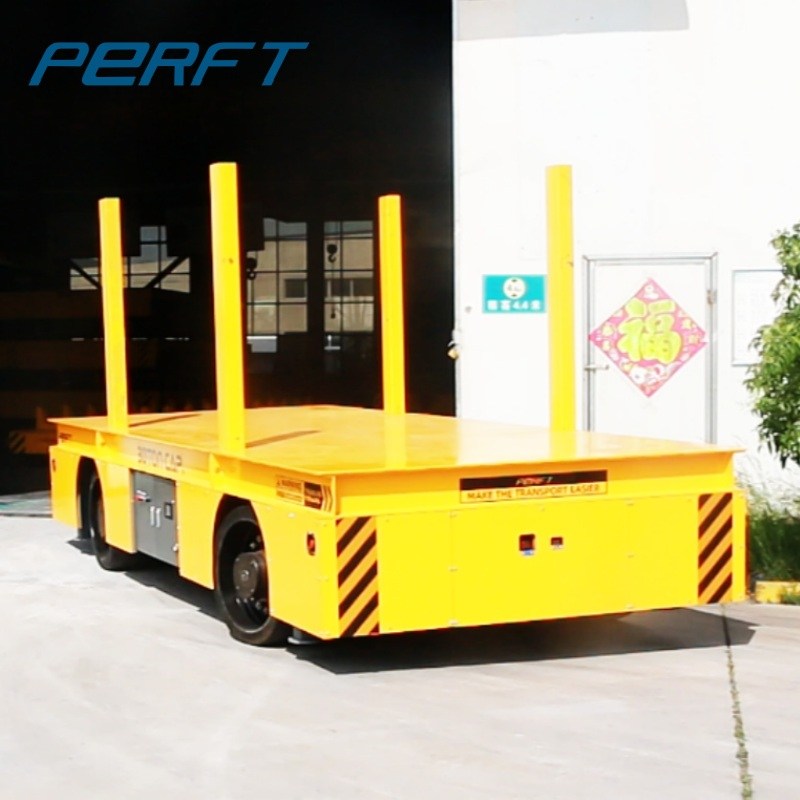
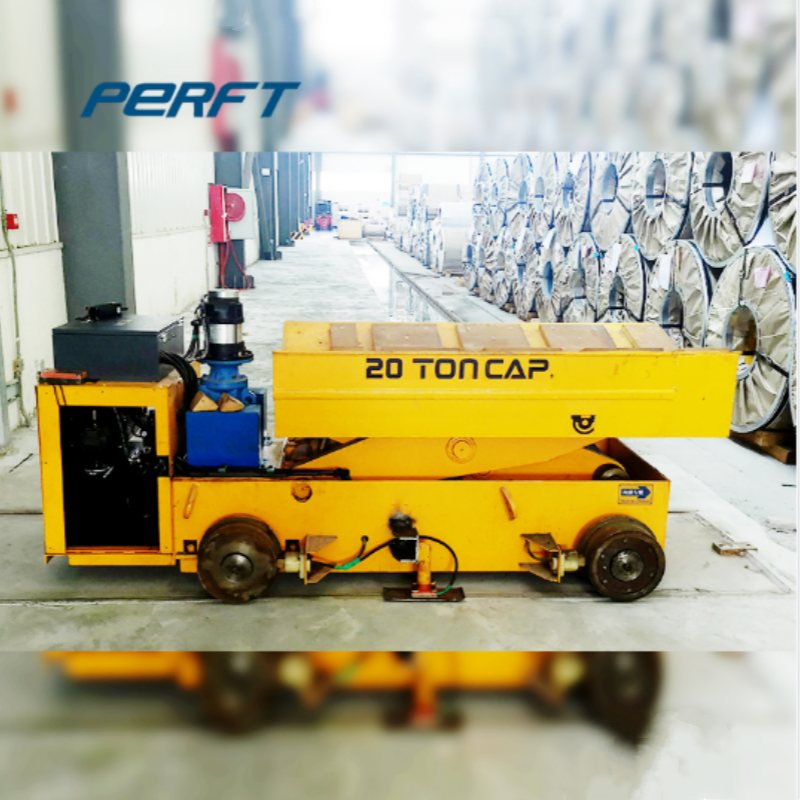
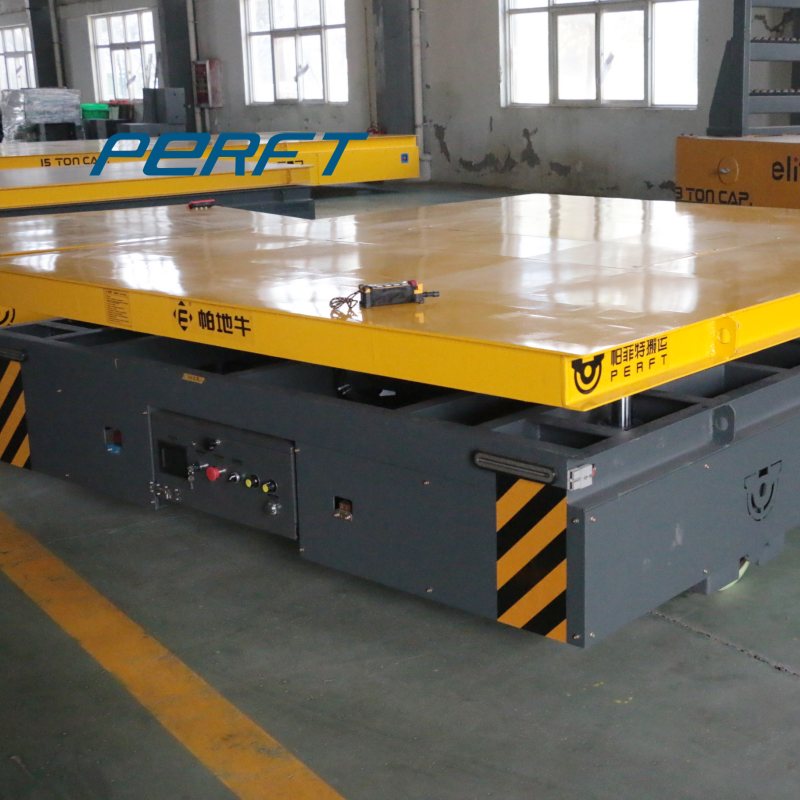
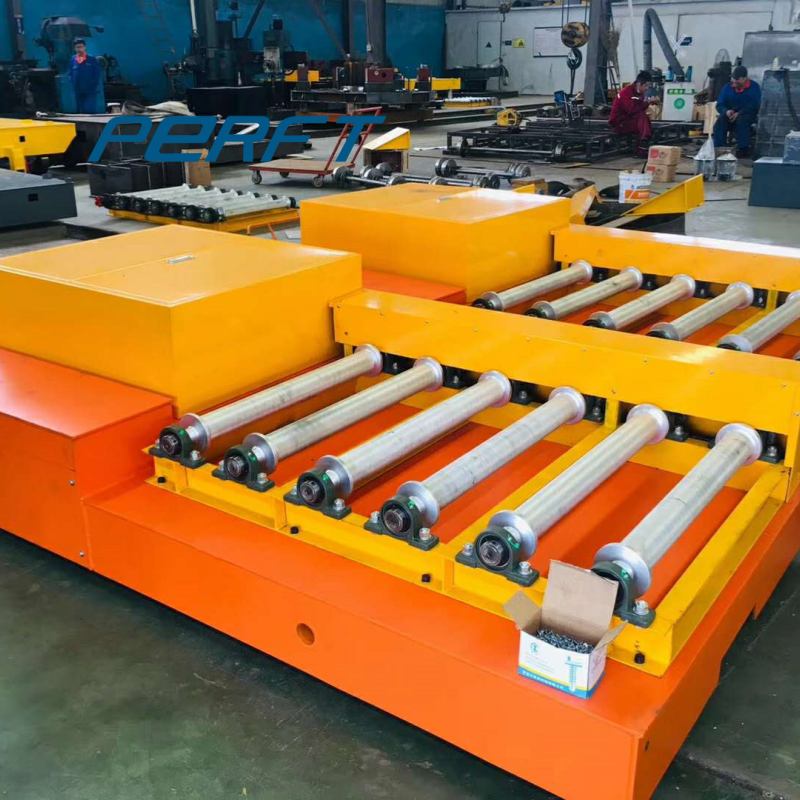
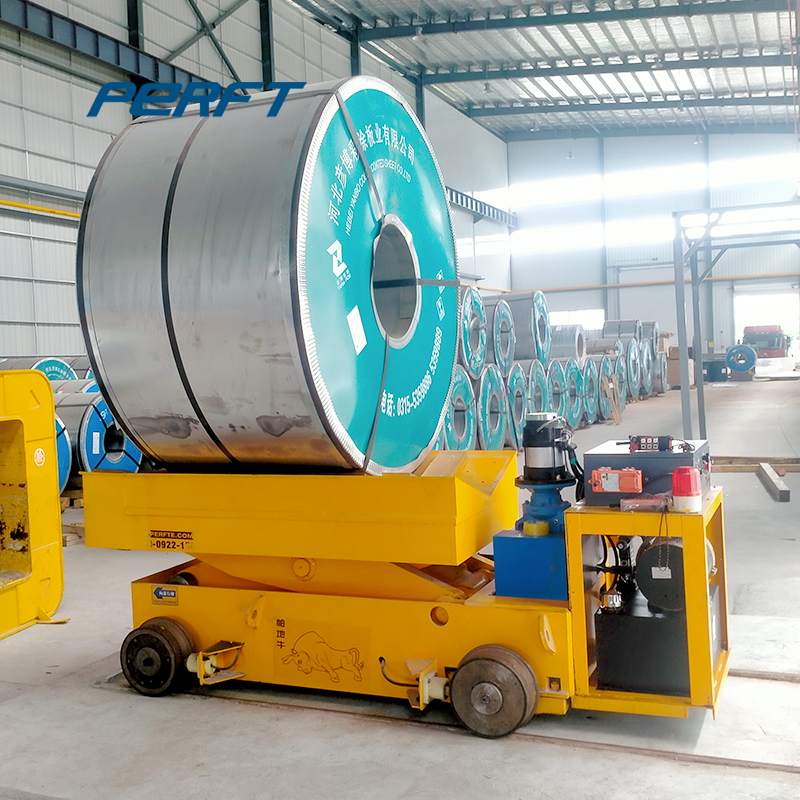
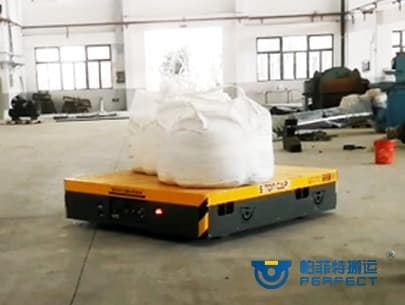
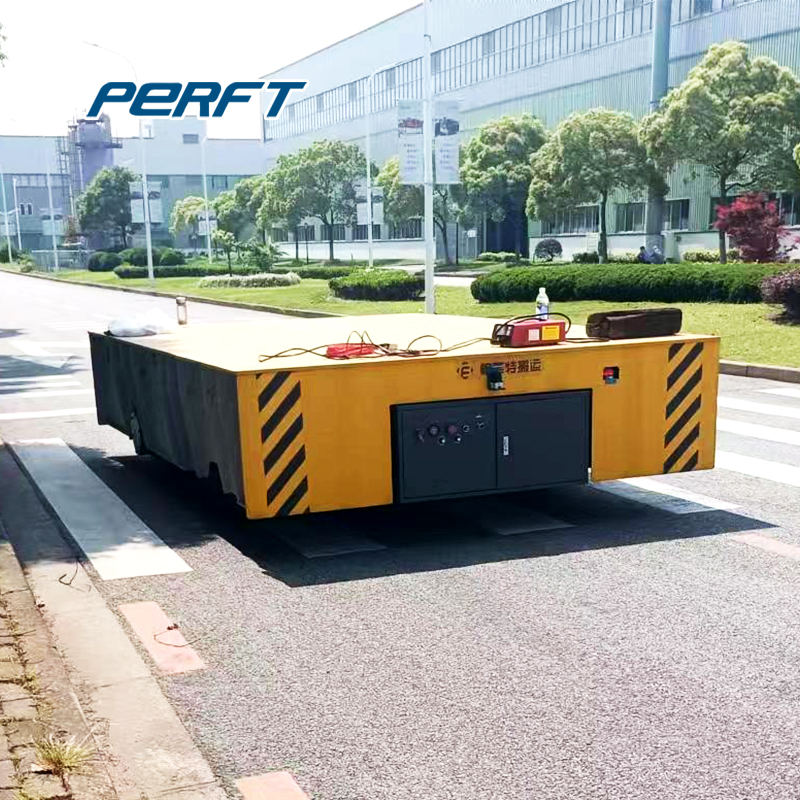
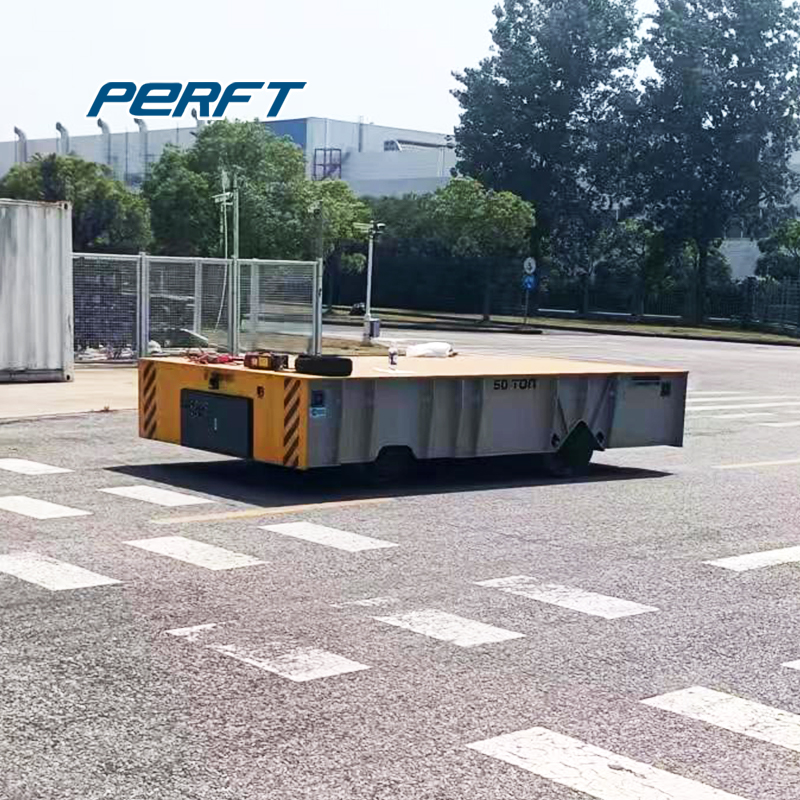
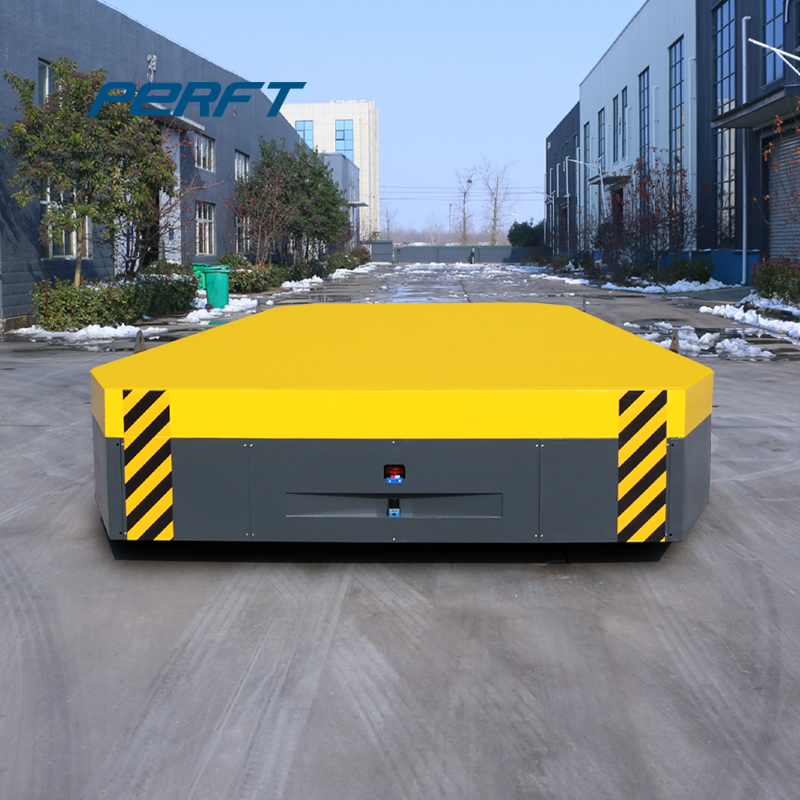
A wide selection of optional attachments meets diverse logistics needs. Rubber wheels for both rail and ground travel let the cart drive on factory floors without tracks. Hydraulic lifting decks simplify loading and unloading work, and tipper platforms allow bulk material dumping. These upgrades solve many problems during cargo handling, offloading, and cross-area relocation.
Typical Application Scenarios
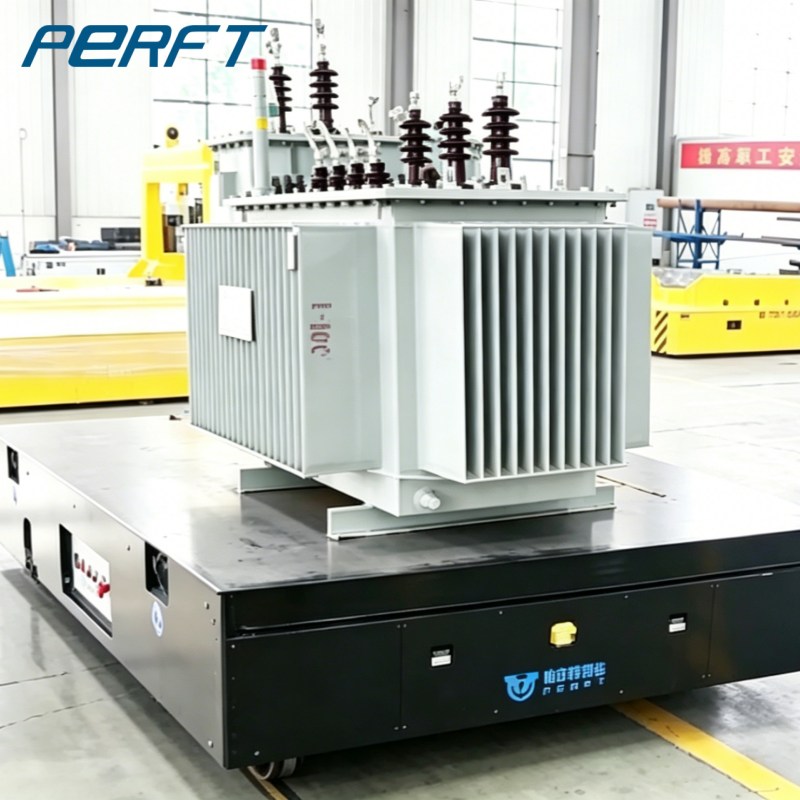
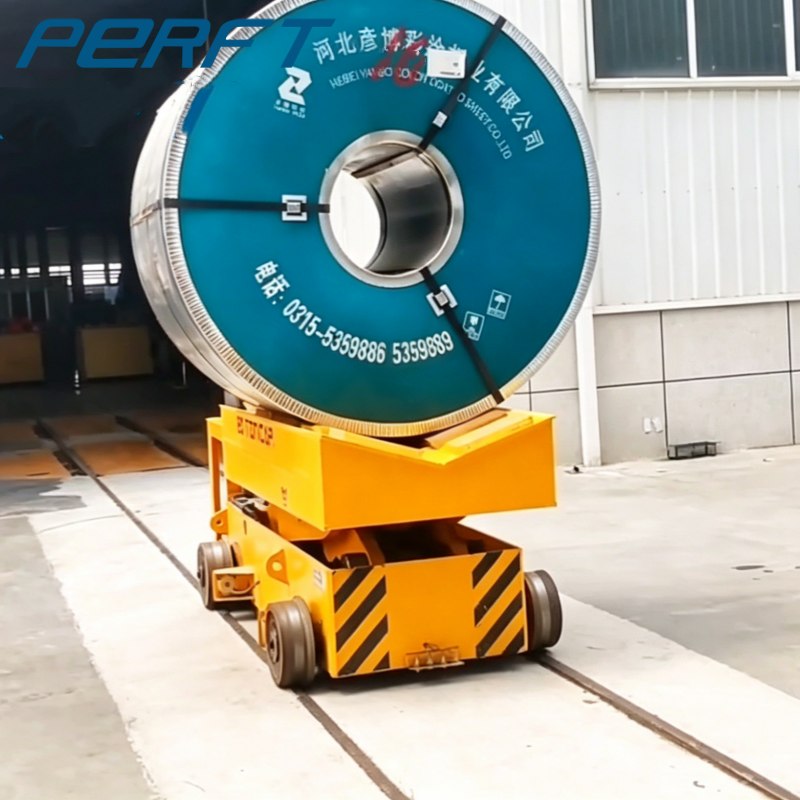
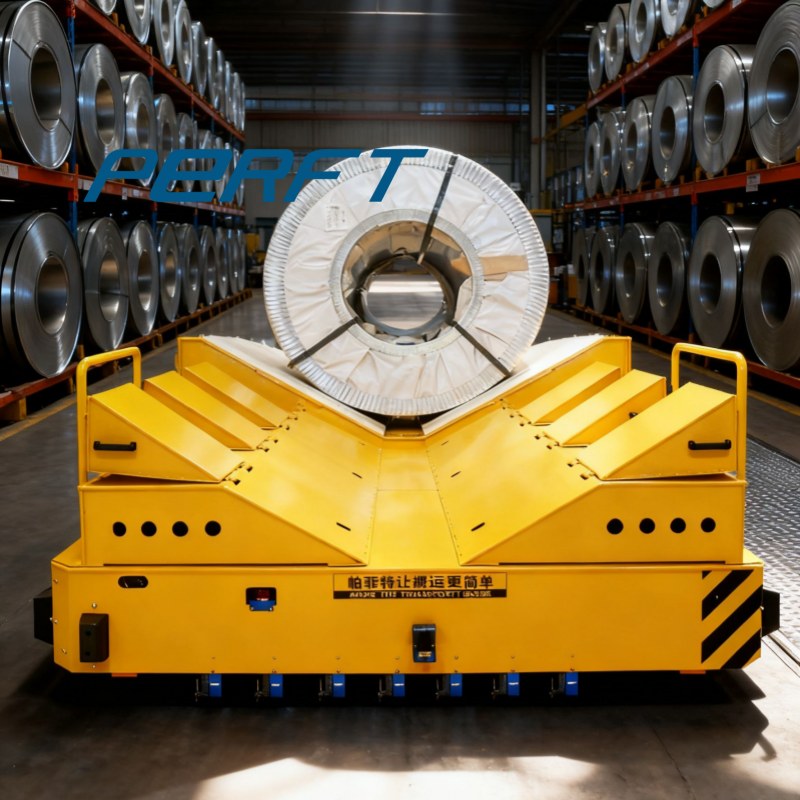
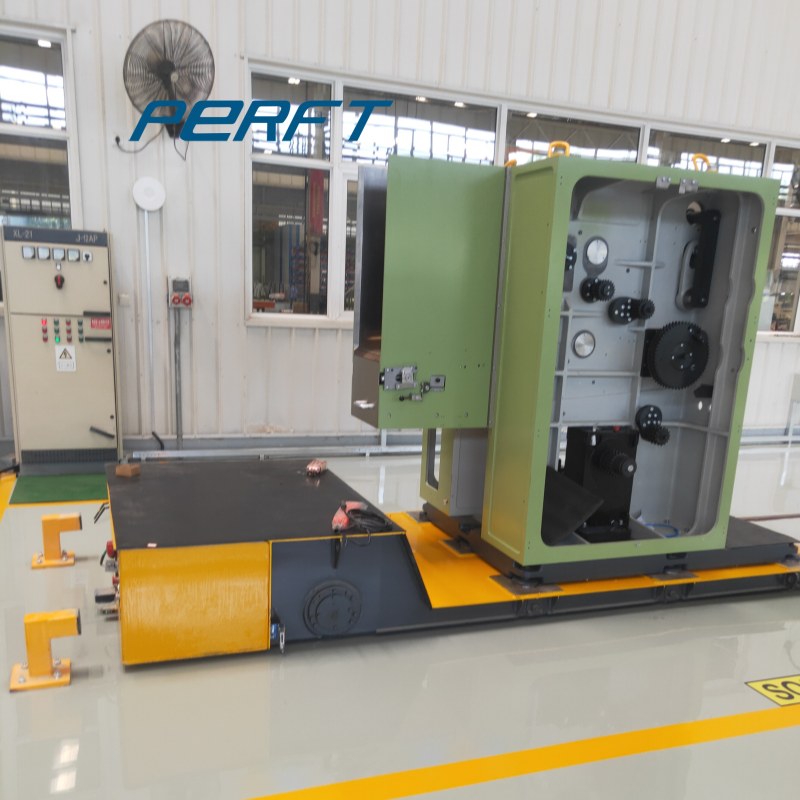
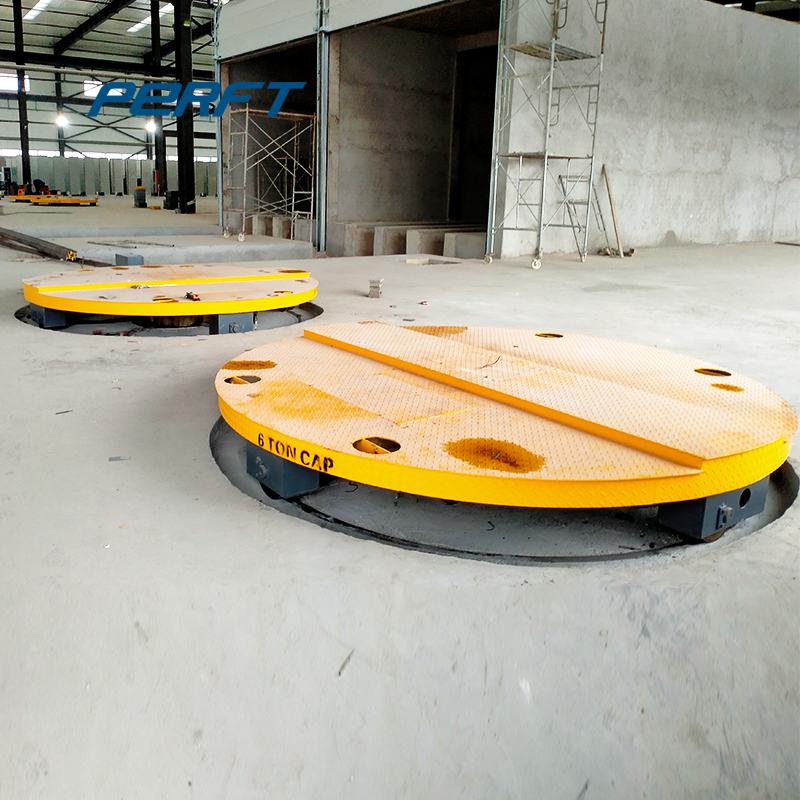
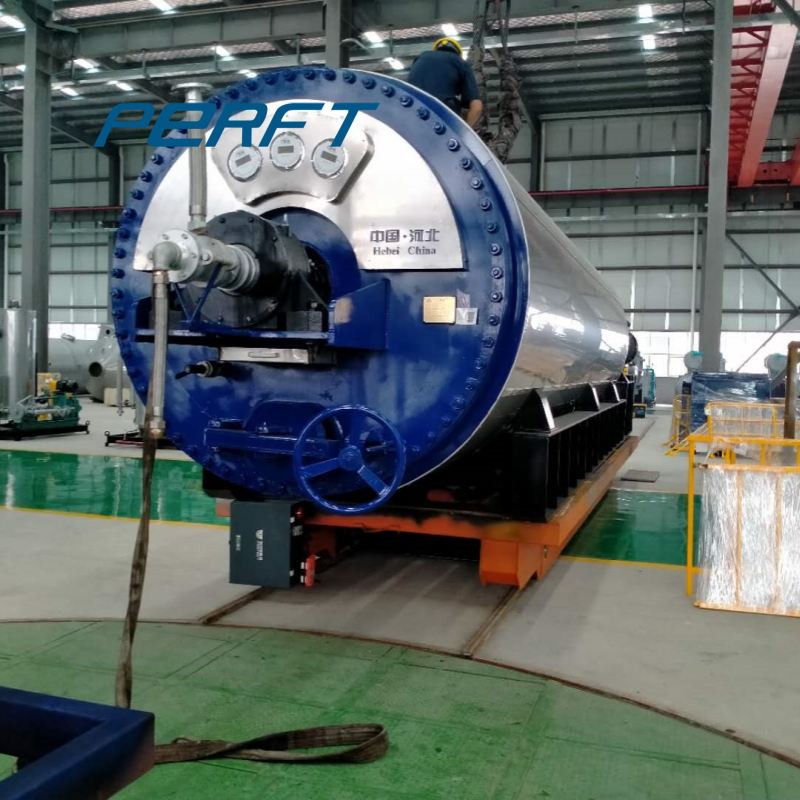
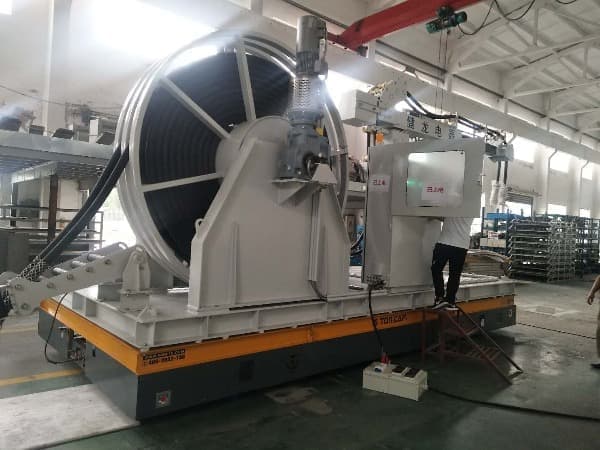
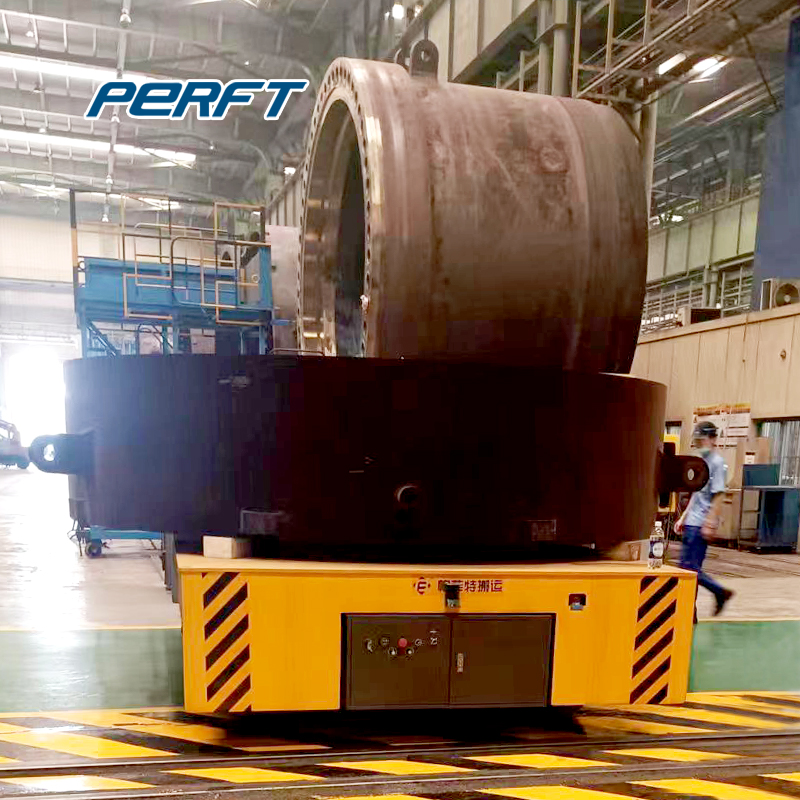
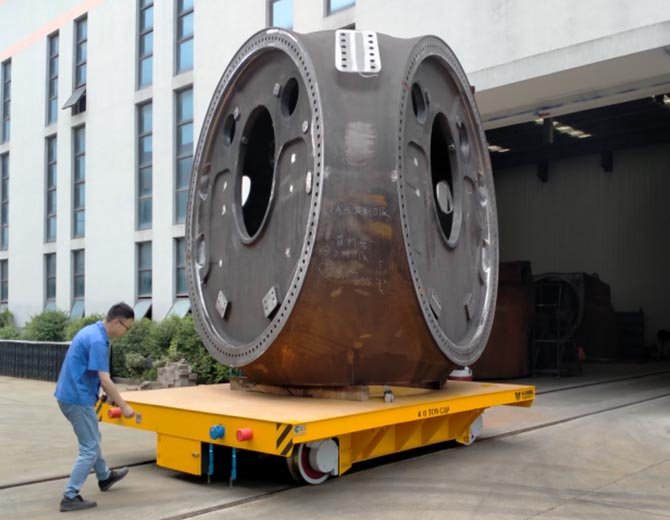
These rail flatbed towing carts are widely adopted in machinery workshops, steel structure factories, foundries, new energy plants, and large storage yards. Common tasks include raw material warehousing, finished goods outbound delivery, and cross-workshop transport of oversized components.
As industrial logistics keeps evolving, rail flatbed towing carts bring great value with high load capacity, flexible functions, and intelligent potential. They break bottlenecks in factory internal material movement, shorten transit cycles, and lower cargo damage rates, making them a cost-effective heavy-duty transport choice for modern manufacturers.